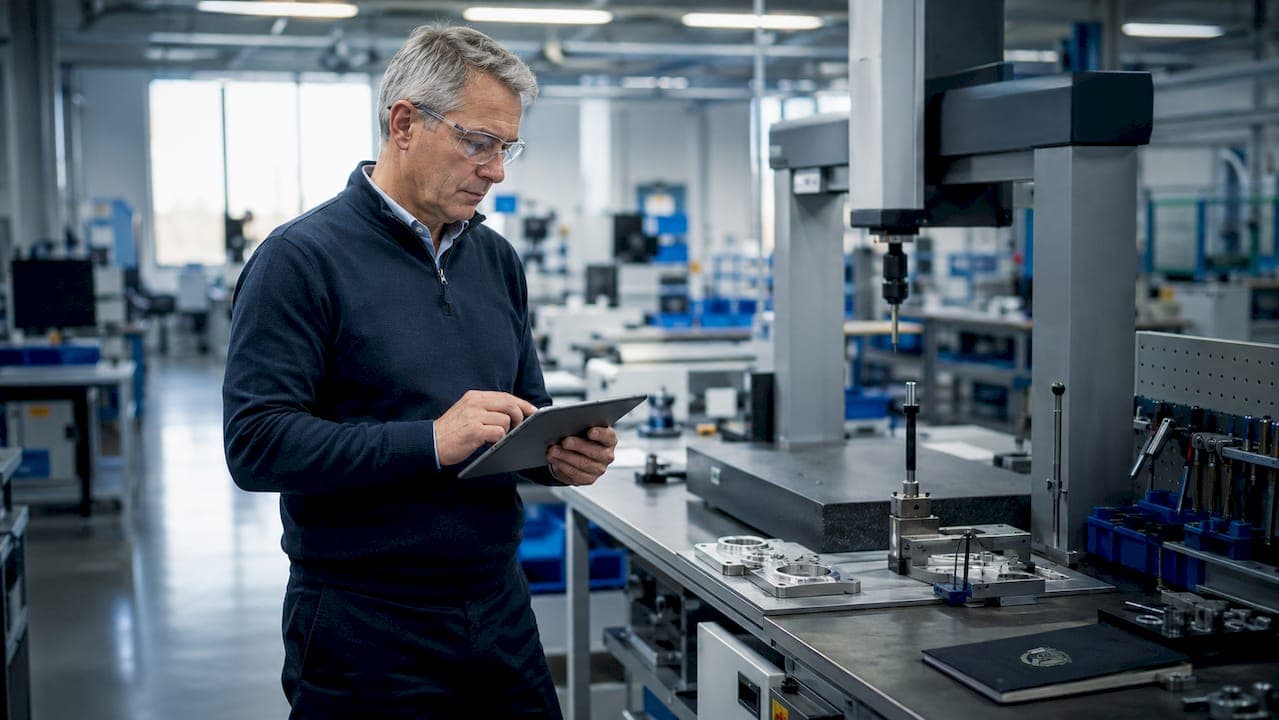
Production tracking software is a real-time digital monitoring system that captures machine states, labor inputs, quality checks, and work-in-process data across every stage of a manufacturing operation. The industry term for this category is Manufacturing Execution System (MES), though "production tracking software" describes the same core function: giving production managers continuous visibility into what is happening on the shop floor right now. Without this visibility, bottlenecks go undetected, scrap rates climb, and quality compliance becomes a guessing game. This guide covers how these systems work, what features matter most, how to clear the common implementation hurdles, and how to choose the right platform for your facility.
How does production tracking software improve manufacturing efficiency and quality?
The core mechanism is simple: replace delayed, manual reporting with continuous, automated data capture. IoT-based MES systems are deployed across 300+ production facilities for real-time bottleneck identification and performance optimization. That scale reflects how thoroughly the industry has moved past spreadsheets and shift-end paper logs.
Real-time data capture does three things that manual methods cannot:
- Eliminates reporting lag. When a machine goes idle or a batch fails inspection, the system flags it immediately. Your team responds in minutes, not at the next shift meeting.
- Reduces manual entry errors. Automated data collection from sensors, RFID tags, and connected machines removes the transcription mistakes that corrupt production records and distort yield calculations.
- Aligns cross-functional workflows. Unified execution layers integrate quality, inventory, and production data, managing thousands of real-time signals each shift. Maintenance, scheduling, and quality teams work from the same data set instead of three separate systems.
Proactive monitoring also changes how your team handles downtime. Instead of reacting after a line stops, the system sends alerts when a machine's output rate drops below threshold. That shift from reactive to proactive management is where the real efficiency gains appear.
Pro Tip: Set alert thresholds at 85% of your target cycle time, not 100%. Catching a slowdown before it becomes a stoppage gives your maintenance team a window to act without halting production.

Scrap reduction follows the same logic. When production data is tracked by batch, part number, and operation, root cause analysis takes hours instead of days. You can trace a dimensional defect back to a specific tool change, operator shift, or raw material lot, then correct the process before the next run.
What are the key features and technologies behind effective production tracking software?
Effective shop floor monitoring systems share a common technology stack. The features below define the difference between a system that delivers real visibility and one that simply digitizes your existing paperwork.
- IoT integration for machine and operator data. Connected sensors feed machine state, cycle count, and temperature data directly into the platform. Operators log job starts, completions, and quality holds from tablets or mobile devices at the point of action.
- RFID and BLE automated tracking. RFID and BLE technologies enable automated real-time tracking of work-in-process and tools, removing inaccuracies from manual barcode or paper tracking. Passive tags provide continuous location data without requiring operator input.
- Mobile-first interfaces. Mobile-first interfaces that allow operators to enter data at the point of action greatly improve data accuracy and reduce reporting delays seen with centralized terminals. A system that requires operators to walk to a fixed terminal loses data between the machine and the screen.
- Analytics dashboards and predictive insights. AI-powered manufacturing software transforms collected data into predictive insights, enabling recommendations to prevent risks before they occur. This is the shift from tracking what happened to anticipating what will happen.
- Traceability and audit trails. Every transaction, inspection result, and process change is time-stamped and linked to a specific part, batch, and operator. This traceability supports ISO 9001, AS9100, and PPAP compliance without manual record assembly.
| Feature category | Entry-level platforms | Enterprise platforms |
|---|---|---|
| Data collection | Manual entry, barcode scan | Automated IoT, RFID, BLE |
| Reporting | Scheduled batch reports | Real-time dashboards |
| Quality integration | Separate QMS module | Unified MES and quality layer |
| Mobile access | Limited or browser-only | Native mobile apps |
| Predictive analytics | None | AI-driven alerts and forecasts |
Pro Tip: Before evaluating any platform, map your current data collection points. If more than 30% of your production data still comes from paper forms, prioritize mobile-first data entry over advanced analytics. You need clean inputs before useful outputs.
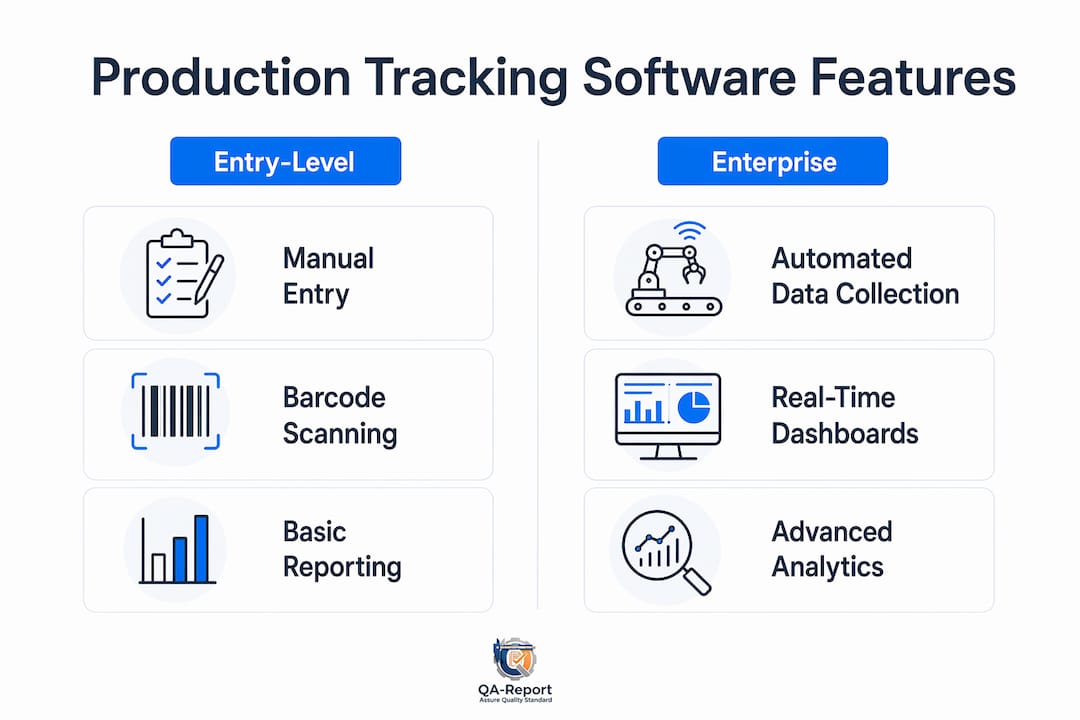
Real-time WIP tracking using wireless tags and centralized dashboards prevents lost work orders, idle stations, and manual scanning delays, improving throughput and transparency. The practical result is that supervisors can see exactly where every job sits in the production sequence without walking the floor.
What challenges do manufacturers face implementing production tracking software?
Software deployment is rarely the hard part. The real obstacles are organizational and data-related.
- Data integration across legacy systems. Most facilities run a mix of older CNC controllers, ERP systems, and manual logs. Getting these to feed a single platform requires middleware, custom APIs, or manual data migration. Plan for this work before go-live, not after.
- Automating chaotic workflows. Standardizing shop floor data before digitization prevents what practitioners call "digital garbage." Automating a disorganized process produces disorganized digital records faster. Map and clean your workflows first.
- Operator adoption. Operators who have used paper travelers for 15 years will not switch to tablets without training and visible benefit. Systems with intuitive mobile interfaces and minimal required fields see faster adoption than those designed for desktop use.
- Change management in planning and quality. Production managers often resist real-time visibility because it exposes scheduling decisions to scrutiny. Frame the system as a tool for the team, not a surveillance mechanism.
- Sustaining the change. Senior leadership must treat the platform as a permanent operational layer, not a pilot project. Continuous training, regular dashboard reviews, and clear accountability for data quality keep adoption from backsliding.
The integration of fragmented workflows is often more challenging than the software deployment itself. Automating chaotic processes risks poor efficiency outcomes. That finding should anchor your implementation plan: structure before software.
How to select the right production tracking software for your manufacturing facility?
Selection criteria fall into five categories. Evaluate each one against your current operation and your three-year growth plan.
Scalability and workflow fit
The platform must handle your current part mix, batch sizes, and shift structure without customization that breaks during updates. Ask vendors for references from facilities with similar production complexity, not just similar industry.
Real-time visibility and mobile usability
If your inspectors and operators cannot access the system from the shop floor on a mobile device, your data will always lag reality. Test the mobile interface with actual operators during any trial period.
Integration with MES, ERP, and quality systems
A production management solution that cannot exchange data with your ERP creates a second data silo. Confirm native connectors or documented APIs for your specific ERP version. For quality compliance, the platform should link production records directly to inspection results, supporting manufacturing quality control without manual cross-referencing.
Cost and ROI expectations
Entry-level workflow tracking software typically charges per user or per facility. Enterprise platforms price by module and data volume. Calculate ROI against three metrics: reduction in unplanned downtime, reduction in scrap cost, and hours saved on compliance reporting. These are the categories where production tracking delivers measurable returns fastest.
Vendor support and customization
A platform with strong user community documentation and responsive support reduces your dependency on internal IT. Avoid vendors who require paid professional services for every configuration change. Your production environment will change, and your software needs to keep pace without a consulting engagement each time.
Unified manufacturing execution systems help scale production by integrating maintenance, quality, and scheduling in real time, reducing managerial overhead. That integration capability is the single most important differentiator between platforms that grow with your operation and those that become bottlenecks themselves.
Key Takeaways
Effective production tracking software requires clean data inputs, mobile-first operator tools, and a unified execution layer connecting quality, scheduling, and maintenance in real time.
| Point | Details |
|---|---|
| Structure before software | Standardize and map workflows before digitizing to avoid automating disorder. |
| Mobile-first data entry | Operators entering data at the machine produce more accurate records than centralized terminals. |
| RFID and BLE eliminate blind spots | Automated passive tracking removes the WIP visibility gaps that manual scanning creates. |
| Unified execution layers scale operations | Connecting quality, maintenance, and scheduling in one system reduces overhead as complexity grows. |
| Traceability drives compliance | Time-stamped audit trails linked to parts and batches support ISO 9001, AS9100, and PPAP without manual assembly. |
What I've learned after watching dozens of MES rollouts fail
I've watched facilities spend six figures on production tracking platforms and see almost no return. The pattern is consistent: they bought software to solve a data problem that was actually a process problem.
The most common mistake is treating the platform as the fix. A shop floor where supervisors rely on tribal knowledge and verbal handoffs will not become data-driven because you installed a dashboard. The dashboard will show you noise, not signal, until the underlying workflows are documented and enforced.
The second mistake is underestimating the mobile interface question. AI-driven predictive analytics get most of the attention in vendor demos, but the feature that determines adoption is whether your operators can log a quality hold in under 10 seconds from the machine. If they cannot, they will not. And if operators do not use the system consistently, your data is incomplete, your dashboards are wrong, and your predictive models are built on fiction.
The third thing I've learned is that OEE metrics can mislead you if your tracking system is not capturing the full cost picture. High throughput numbers on a dashboard can mask scrap, rework, and overhead misallocation that only show up when quality and production data are genuinely unified.
The facilities that get real value from production tracking share one trait: they treat data quality as a daily operational discipline, not a software feature. Someone owns the data. Someone reviews it every shift. Someone acts on the alerts. The technology is the enabler. The discipline is the result.
— Michael Chen
QA-Report: production tracking and quality inspection in one platform
Production managers who need both shop floor monitoring and audit-ready quality reporting typically run two separate systems. QA-Report eliminates that split.
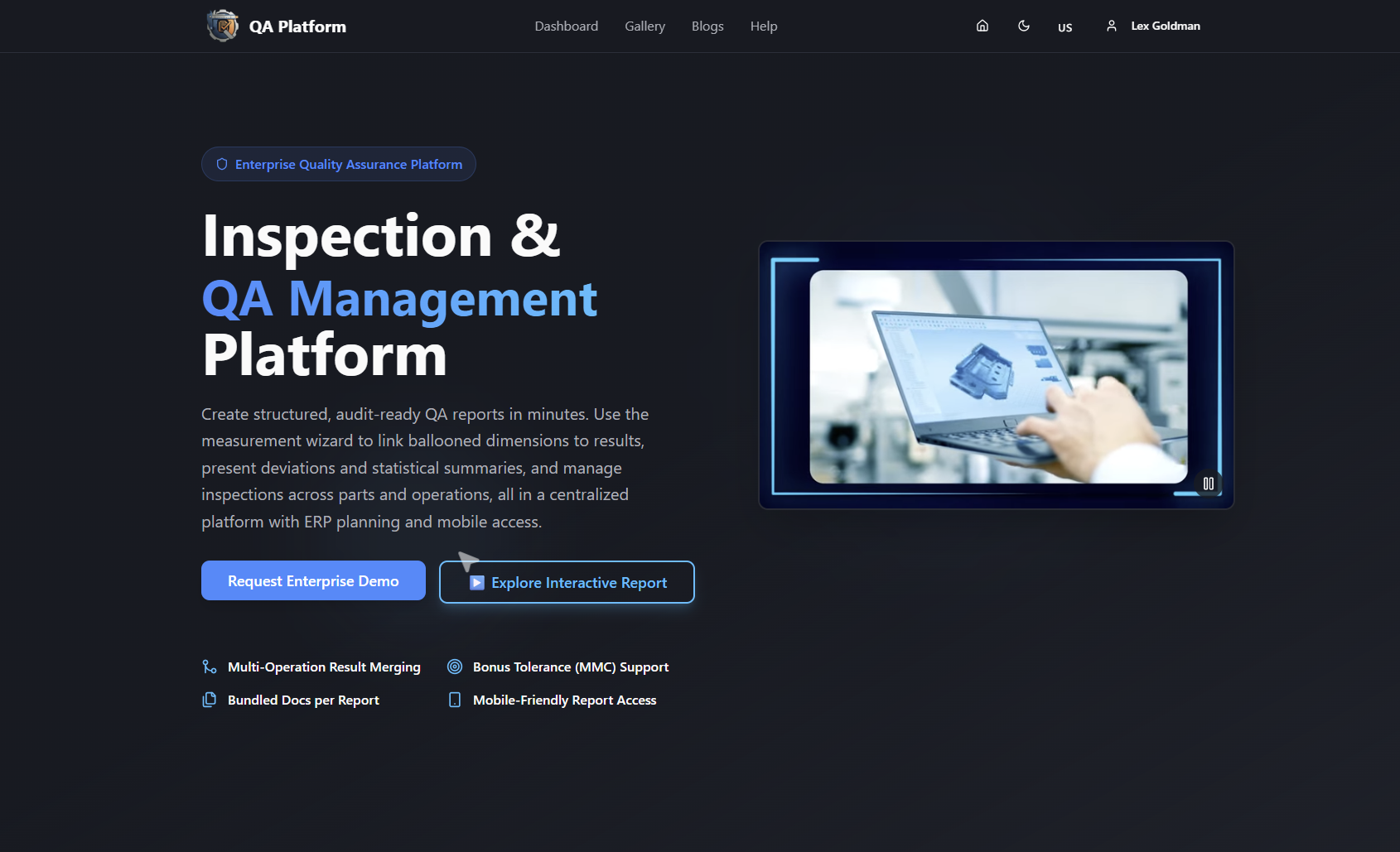
QA-Report combines an integrated MES layer with a full quality inspection platform. Route cards, kanban and Gantt planning, rejection and recovery tracking, and role-based shop-floor access sit alongside automated drawing ballooning, CMM data import, and GD&T tolerance validation. Inspection results link directly to production batches, so your quality inspection reports satisfy ISO 9001, AS9100, and PPAP requirements without manual record assembly. Everything runs in one cloud-based platform with mobile access for inspectors on the floor. Try QA-Report with a free trial and see how unified production and quality data changes what your team can act on.
FAQ
What is production tracking software?
Production tracking software is a digital system that monitors manufacturing workflows in real time, capturing machine states, labor inputs, quality results, and work-in-process location. The industry standard term for this category is Manufacturing Execution System (MES).
How does real-time production monitoring reduce scrap?
Real-time monitoring links dimensional defects and quality holds to specific batches, tools, and operators as they occur. That traceability lets production managers correct the root cause before the next run rather than after a full batch is scrapped.
What is the difference between RFID and BLE tracking in manufacturing?
RFID uses radio frequency tags that are read by fixed or handheld scanners, while BLE (Bluetooth Low Energy) uses wireless beacons for continuous location updates. Both remove the manual scanning delays that create WIP visibility gaps, but BLE provides more frequent location updates without requiring line-of-sight.
How long does it take to implement production tracking software?
Implementation timelines vary by facility complexity and data readiness. Facilities with documented workflows and modern ERP systems typically go live in 8–16 weeks. Facilities with legacy systems and unstructured data should plan for a longer standardization phase before deployment.
Does production tracking software support ISO 9001 and AS9100 compliance?
Yes. Platforms with integrated audit trails, time-stamped inspection records, and batch-level traceability generate the documentation required for ISO 9001, AS9100, and PPAP audits without manual record assembly.