Managing quality inspection, compliance documentation, and supplier reporting from multiple disconnected tools creates gaps in traceability and efficiency. Many common platforms require manual data entry, lack integrated ballooning with CMM output, or force teams to chase pricing and feature details through sales calls. This comparison lists six inspection management software alternatives with feature details, industry fit, and pricing transparency so manufacturing quality teams can choose a system that closes their workflow gaps.
Table of Contents
QA Platform
At a Glance
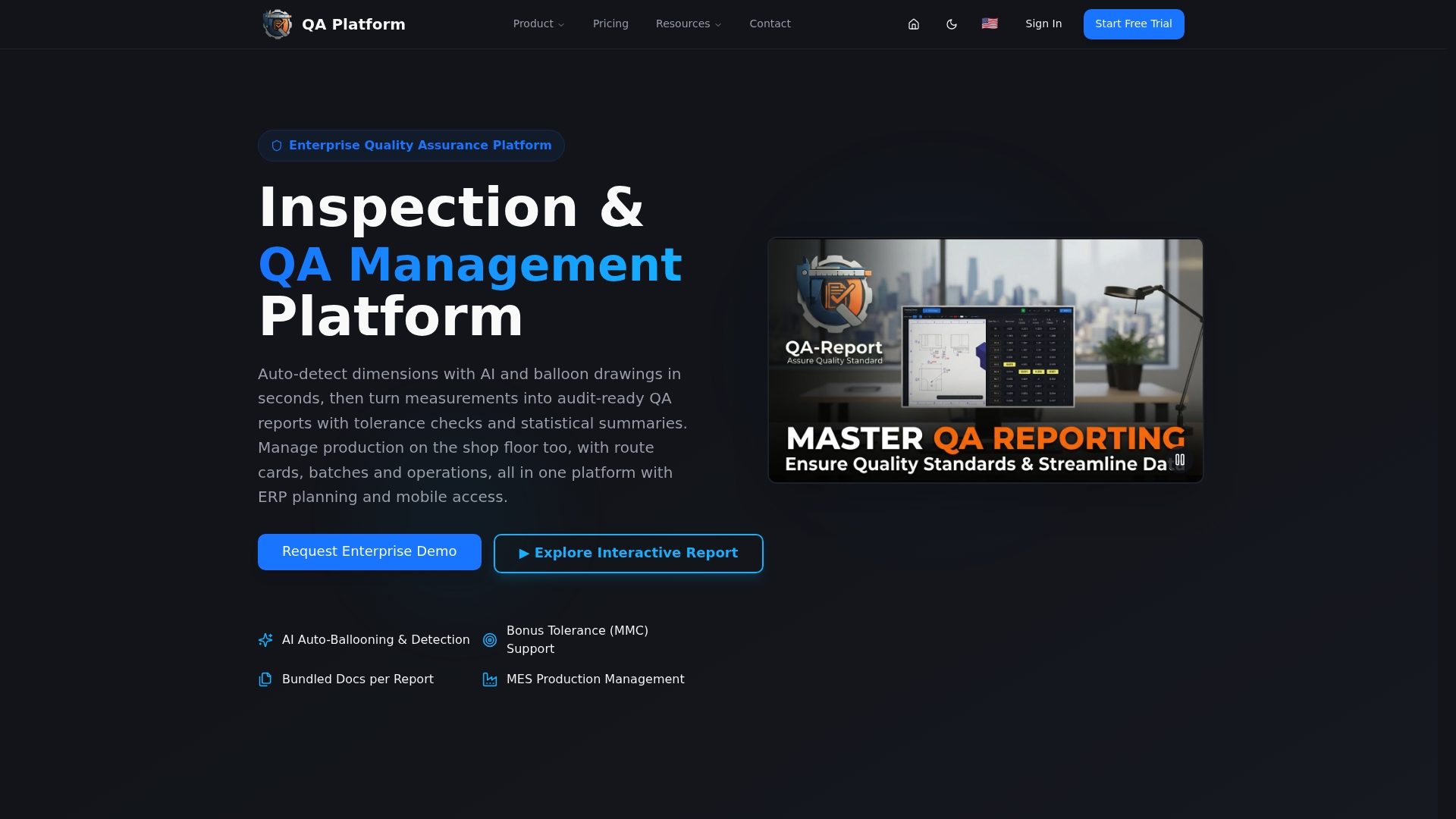
The measurement wizard links ballooned drawing dimensions directly to measured results and auto-flags out-of-tolerance deviations. QA Platform runs as a cloud-based quality inspection and reporting system that supports audit-ready First Article Inspection, dimensional, and GD&T reports. The platform targets aerospace, automotive, and medical device workflows and generates professional PDFs that meet ISO 9001, AS9100, and PPAP reporting needs.
Core Features
QA Platform performs AI auto-ballooning on PDF drawings and pairs that output with a Measurement Wizard that ties each balloon to measured values and tolerance checks. It accepts CMM imports, includes a built-in 3D CAD viewer (STEP/IGES), and runs tolerance validation and GD&T calculations. An integrated MES layer provides production planning with route cards, kanban and Gantt planning, rejection and recovery tracking, and role-based shop-floor access with mobile inspector use.
Key Differentiator
AI-powered auto-detection and ballooning of drawing dimensions combined with production and inspection management in a single system. That combination removes the usual handoffs between drawing preparation, measurement import, and production tracking.
Pros
Automation reduces manual measurement data entry by linking ballooned dimensions to imported CMM output and by auto-flagging out-of-tolerance items during inspection workflows. Multi-platform CMM integration supports common systems such as Zeiss, Mitutoyo, and Hexagon, which preserves traceability from machine outputs to reports. Built-in GD&T and advanced tolerance analysis produce structured, audit-ready reports, and configurable plans let teams scale from single inspectors to enterprise deployments.
Cons
- May be complex for new users to set up without prior experience in CMM data or inspection processes.
Notable Integrations
- Zeiss Calypso
- Mitutoyo MCOSMOS
- Hexagon PC-DMIS
- Brown & Sharpe
Who It's For
Manufacturers and quality professionals in aerospace, automotive, medical device, and precision machining who need automated inspection documentation and stronger traceability. Teams that rely on CMM measurement data and require GD&T validation will see the most immediate benefit. Organizations planning to centralize inspection reports and link them to production planning will find the feature set appropriate.
Unique Value Proposition
The measurement wizard produces audit-ready FAI, dimensional, and GD&T reports while linking each balloon on the drawing to actual measurement results. That direct linkage shortens the path from CMM output to compliance documentation and reduces opportunities for transcription errors during report assembly.
Real World Use Case
According to the company, a precision manufacturer used QA Platform to auto-generate inspection reports from Zeiss CMM data and reduced manual data entry hours by 80%. That change cut the time needed to prepare audit packages and improved traceability between part measurements and final reports.
Pricing
Pricing tiers include a Free option, $49.99/month Basic, and $149.99/month Pro. Enterprise solutions use custom pricing and arrangements for advanced features and deployment needs.
Website: https://qa-report.com
High QA
At a Glance
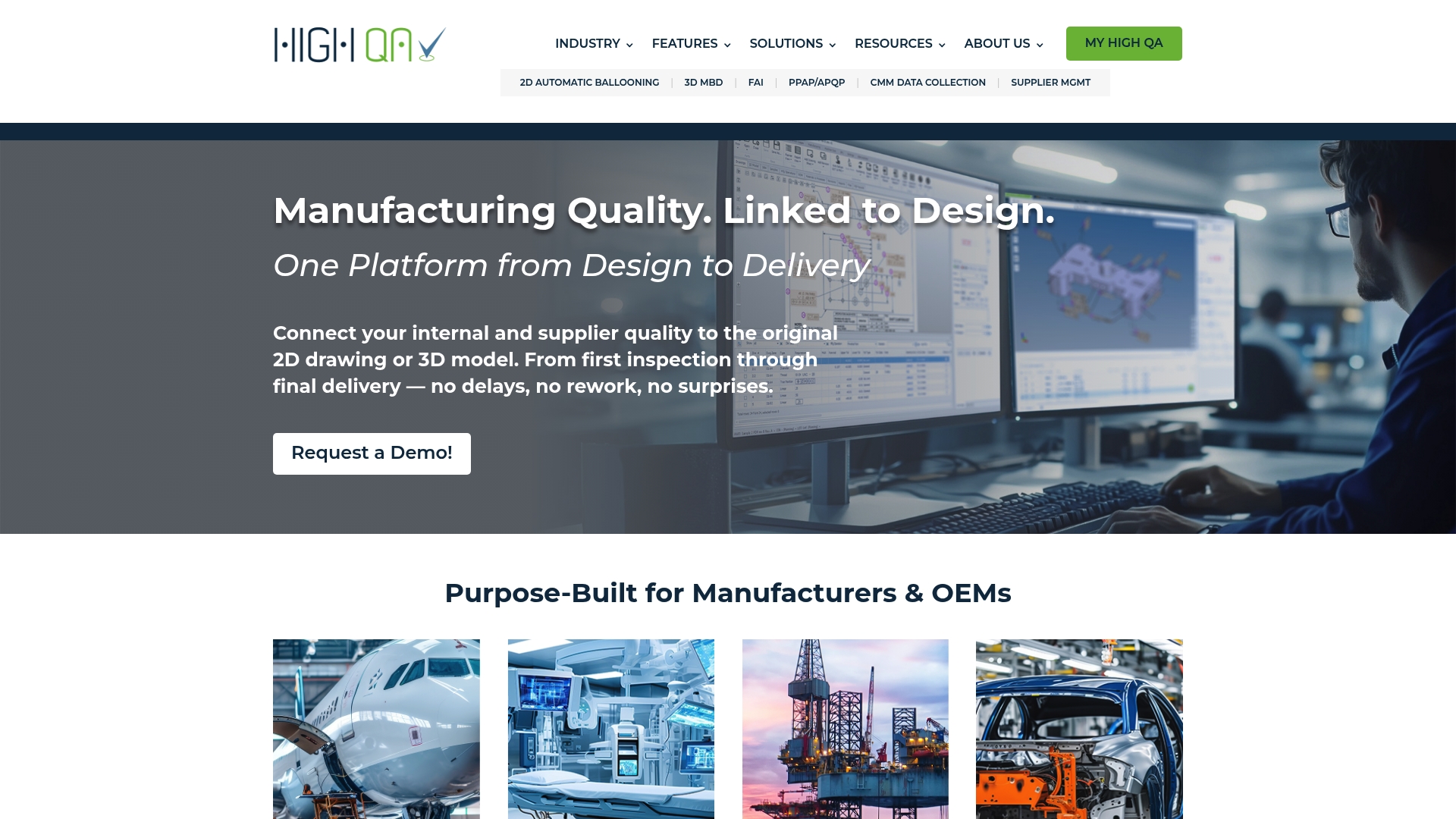
High QA reports being trusted by over 1,600 global manufacturing companies. It links design data directly to inspection, supplier collaboration, and regulatory reporting for aerospace, medical, and automotive manufacturers. Automatic 2D and 3D ballooning, GD&T extraction, and digital FAI workflows reduce manual planning effort.
Core Features
Part and job planning extracts GD&T and PMI from 2D drawings and 3D models and supports model based definition. Automatic 2D and 3D ballooning links drawing callouts to measurement routines while AQL sampling and SPC monitor production quality. The platform collects CMM and gage data, manages tools and NCRs, and generates FAI, PPAP, and APQP reports.
Key Differentiator
High QA combines design, inspection, and supplier collaboration within a single platform tailored for critical manufacturing industries. That integration reduces handoffs between engineering and quality and keeps traceability intact across suppliers and projects. The focus suits OEMs and tier suppliers that need CAD linked inspections and supplier data exchange.
Pros
Users praise secure document sharing and fine grained access controls that help meet ISO and CMMC requirements. Generative AI features assist in drafting quality documentation and speeding analysis of inspection results. Real time analytics and off the shelf ERP and CMM integrations support faster decision making and fewer delays.
Cons
-
Steep learning curve for teams new to digital manufacturing. Initial configuration and training require dedicated time.
-
Users report performance lag with very large datasets during real time analytics.
-
Integrations cover mainstream ERP and measurement tools but may miss niche or legacy systems.
-
Deployment and familiarization can demand vendor support for complex workflows.
When It May Not Fit
Not a good fit for small shops that lack structured CAD data or do not need supplier collaboration. Organizations running highly customized legacy systems may face integration gaps. Teams that need immediate, lightweight inspection tools without training overhead should evaluate simpler alternatives.
Notable Integrations
-
ERP systems such as SAP, Oracle, and Epicor
-
CMM and gage data collection systems
-
PolyWorks and other measurement software
-
APIs for custom integrations
Who It's For
Manufacturing quality managers, production engineers, and supply chain coordinators at OEMs and suppliers benefit most. Industries include aerospace, automotive, medical devices, and energy where traceability and CAD linked inspections matter. Teams that manage FAIs, PPAPs, and supplier submissions gain most from the integrated workflows.
Real World Use Case
According to the company, a midsize aerospace OEM reported an 80% reduction in inspection planning time after automating ballooning and GD&T extraction. The OEM tied CAD based balloons to inspection routines and ingested CMM data for fast verification. Real time reports cut handoffs and made supplier sign off faster.
Pricing
High QA does not publish standard list pricing. Contact High QA for licensing and deployment options tailored to project scope and integrations. Pricing typically reflects module selection and integration needs.
Website: https://highqa.com
Net-Inspect
At a Glance
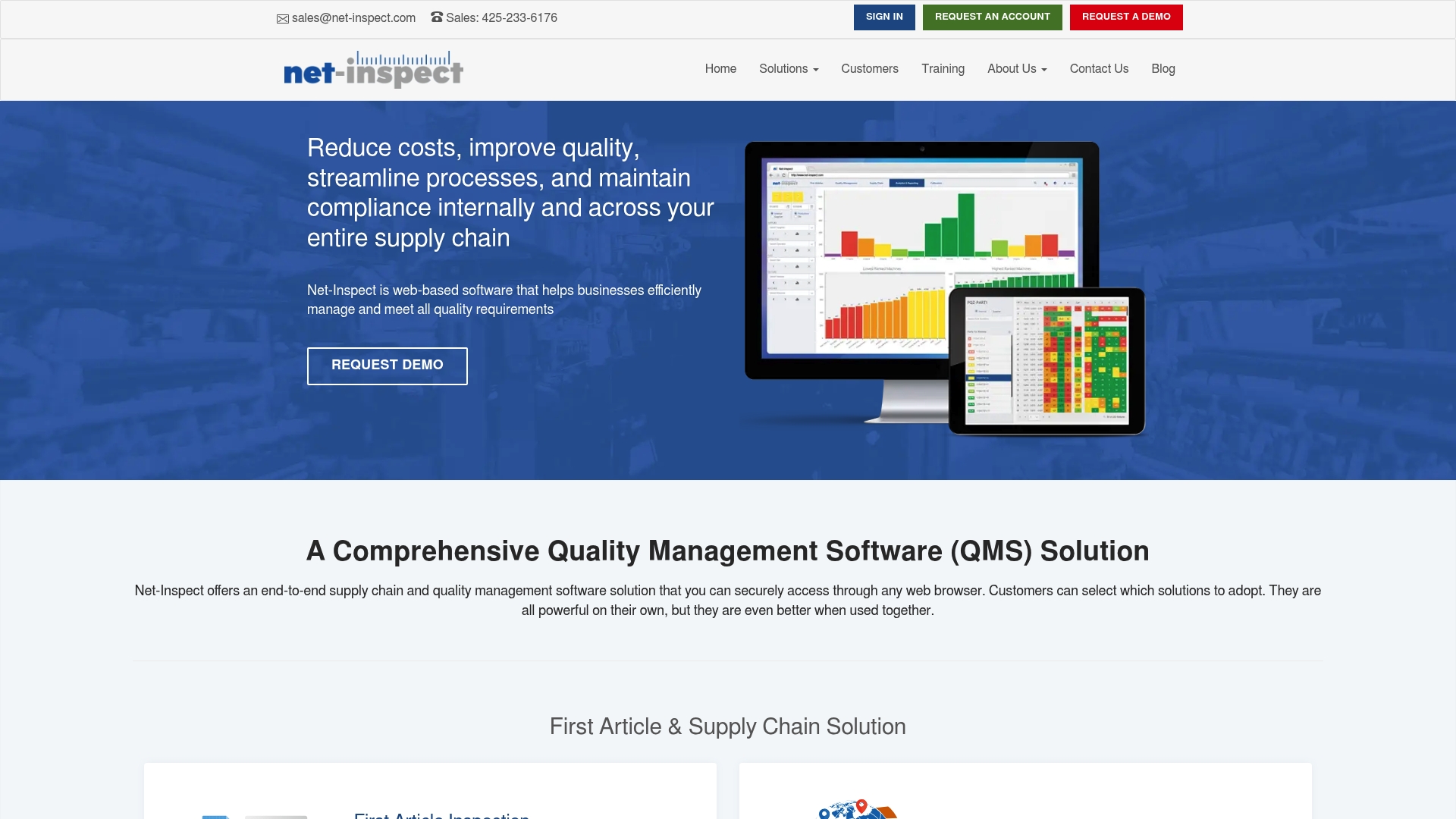
Auto-population of AS9102 forms from engineering drawings removes much of the manual work in first article inspection. The product pairs that feature with built-in auto-ballooning so dimensions map to inspection records automatically. This design reduces repetitive entry and lowers the chance of mismatched balloons and measurements.
Core Features
Net-Inspect groups supply chain quality and shop floor inspection tools into one platform. It supports first article inspection workflows with AS9102 form population, measurement collection, SPC analytics, nonconformance tracking, and tool calibration management. The platform also provides supply chain visibility with sub tier mapping, eSource shipment documentation, and document repositories for certifications and drawings.
Key Differentiator
What sets Net-Inspect apart is the deep coupling of drawing ballooning and FAI paperwork inside the inspection workflow. That linkage means ballooned CAD items transfer directly into AS9102 fields without manual copying. Inspectors save time and reduce transcription errors by working from one authoritative drawing reference.
Pros
Net-Inspect covers a broad set of quality tasks that matter to aerospace and manufacturing teams. The software ties FAI, SPC, nonconformance workflows, and calibration into a single record set so traceability remains intact across activities. According to the company, enterprise security complies with FedRAMP and ITAR/EAR. The platform also accepts real time imports from third party measurement systems which keeps recorded values consistent with inspection equipment outputs.
Cons
-
Limited public user reviews make it hard to verify real world setup times and long term usability.
-
The broad feature set creates a learning curve for new users and may require formal training.
-
Pricing is not published and requires direct contact with sales for a quote.
When It May Not Fit
Organizations that need a lightweight checklist app for ad hoc inspections will find this product heavier than required. Small shops with a single inspector and no supplier network may not use the supply chain mapping features. Buyers who require transparent list pricing before vendor engagement will need to budget time for sales discussions.
Notable Integrations
- Hexagon PC DMIS and other common CMM systems for measurement import.
- FARO and optical inspection hardware for direct data capture.
- Optical character recognition tools for faster document intake and supplier forms.
Who It's For
Quality managers and engineers in aerospace, automotive, electronics, and medical device manufacturing who manage complex supply chains and compliance paperwork will get the most value. The platform suits teams that must link supplier evidence to internal inspection records and maintain audit trails across tiers.
Real World Use Case
An aerospace manufacturer uses Net-Inspect to connect shop floor CMM outputs to AS9102 records. Inspectors balloon a drawing, collect measurements, and the system populates FAI fields automatically. Supply chain quality alerts trigger when a sub tier supplier reports a nonconformance, and documentation for audits is pulled from the same record set.
Pricing
Pricing is not publicly listed. Contact sales for a tailored quote based on modules, user counts, and integration needs.
Website: https://net-inspect.com
GroundControl
At a Glance
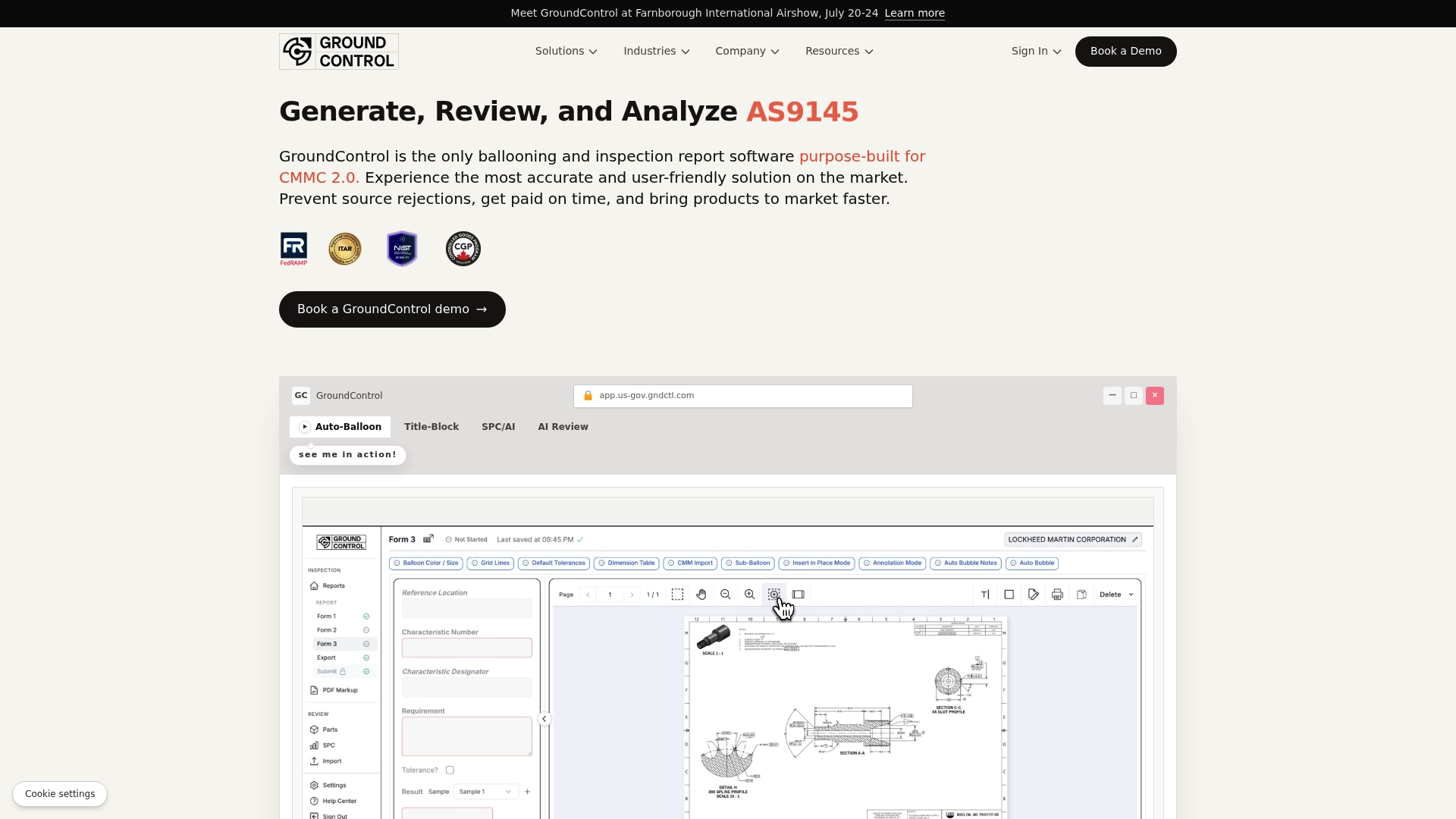
The vendor advertises strong security and compliance with FedRAMP, ITAR, NIST SP 800-171, and AWS GovCloud, aimed at aerospace and defense suppliers. GroundControl automates text extraction from PDF drawings and applies AI to balloon characteristics, which accelerates inspection report creation. The product also offers unlimited user access and export support for AS9102C, PPAP, and Net-Inspect.
Core Features
GroundControl extracts text from PDF drawings and links dimensions to measured results while offering export formats for AS9102C, PPAP, and Net-Inspect. The platform uses AI-assisted characteristic ballooning and validation to reduce manual tagging and to flag out of tolerance readings for human review. It supports end to end quality automation including data generation, review workflows, and integrations with measurement systems and Excel.
Key Differentiator
GroundControl focuses tightly on aerospace quality compliance with automation, AI, and enterprise security in a single product. That focus makes it a narrower choice than broad shop floor MES platforms that add route cards and kanban. The product suits suppliers who must produce audit ready FAI and regulated reports under defense and aerospace controls.
Pros
User friendly ballooning tools and accurate note recognition reduce time spent on manual drawing markup and data entry. Unlimited users at no extra cost makes scaling across inspection teams straightforward and predictable. Built in AI supports human reviewers through approval workflows and automated validation. The vendor reports positive user feedback on process improvements and efficiency gains.
Cons
- Communication and customer support responsiveness have been reported as unreliable by some users, which can slow issue resolution.
- Software stability and technical bugs appear in user reports and can affect reliability during critical inspection runs.
- Mobile and hardware integration requires a steep setup effort for some teams, especially when linking CMMs or vision systems.
- Some users raised security concerns related to software downloads, which may require extra internal review.
When It May Not Fit
Buyers who need an all in one MES with production routing, kanban, and Gantt planning will find GroundControl narrower in scope. Organizations that lack dedicated IT or integration resources may struggle with mobile and hardware setup. Teams that require a vendor with consistently fast support should evaluate support SLAs carefully.
Notable Integrations
- Hexagon
- Zeiss
- Keyence
- Net-Inspect
- Excel
- PDF workflows
Who It's For
Quality teams in aerospace and defense manufacturing that must produce compliant inspection documentation and FAIs will find this product relevant. The platform fits suppliers who prioritize export formats such as AS9102C and Net-Inspect and who operate under ITAR or NIST related controls. It also suits teams that want AI assisted ballooning and enterprise level hosting.
Real World Use Case
According to the company, aerospace subcontractors and OEMs reduce report time by up to 5x when they automate AS9102 FAI documentation with GroundControl. That reduction translates to fewer manual transcription errors and faster supplier review cycles. Teams using the product report improved consistency when validating supplier quality data.
Pricing
Not applicable — informational only. The vendor does not publish standard pricing in the product summary and appears to work with buyers on tailored enterprise arrangements.
Website: https://rungroundcontrol.com
FAIRQA Platform
At a Glance
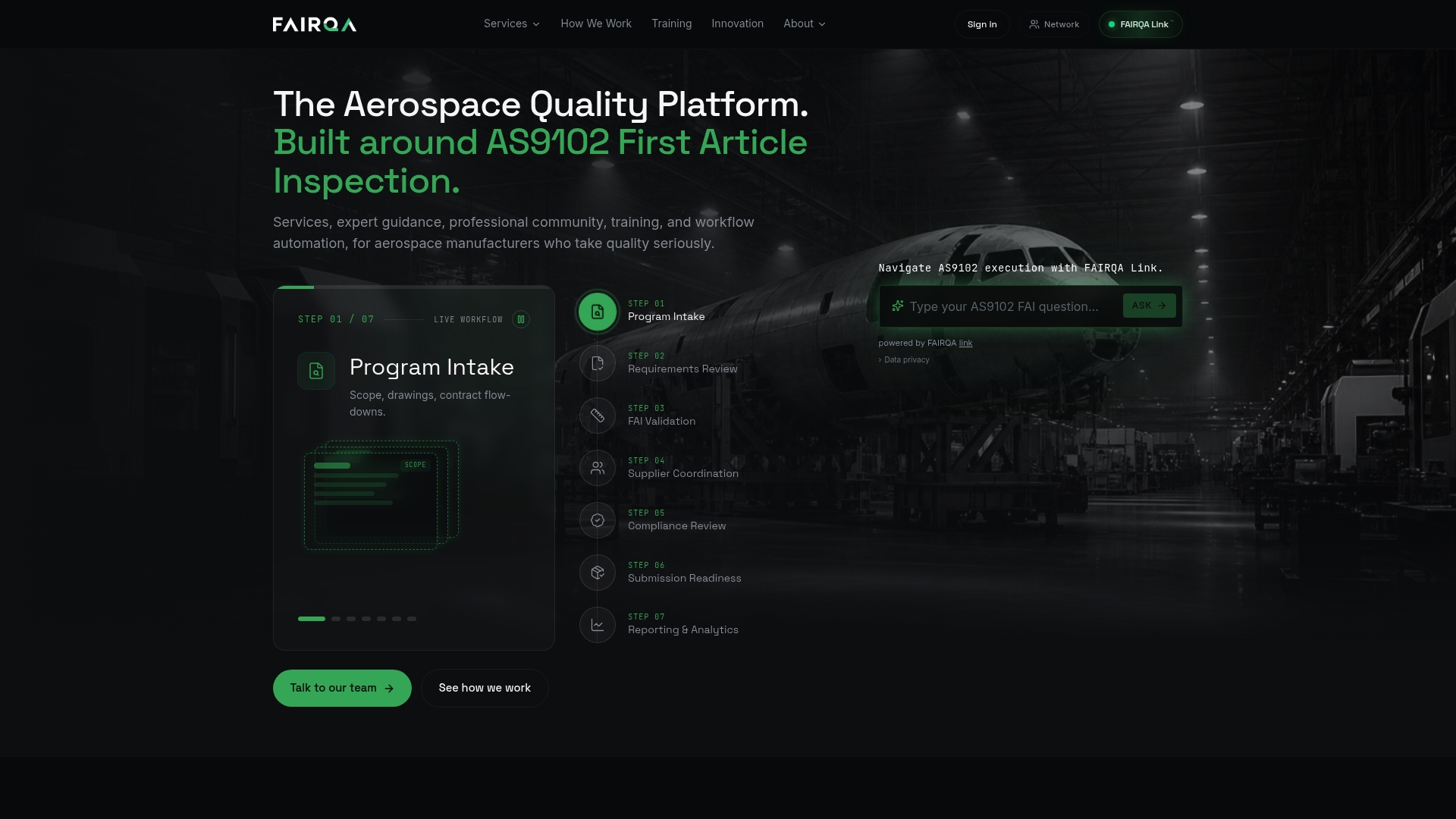
Built around AS9102 First Article Inspection, FAIRQA connects Guidance, Consensus, Workforce Development, Execution, Services, and Innovation. This inspection management software focuses on FAI preparation, review, supplier quality, and workforce training for aerospace manufacturers. The vendor states recognition with ISO 9001, ISO/IEC 27000, and ITAR.
Core Features
FAIRQA combines standards based guidance and GD&T reference material with a professional community for lessons learned and peer review. The FAIRQA Academy delivers structured training while workflow automation enforces review sequences and traceable approvals. Dashboards and trackers provide operational visibility across parts, suppliers, and open actions.
Key Differentiator
FAIRQA’s central distinction is a unified operating model that links guidance, consensus, workforce development, and execution into one framework. That linkage keeps FAI practice, reviewer expectation, and training aligned across suppliers and programs. The platform aims to close gaps between documented procedure and inspection activity.
Pros
Support for AS9102 FAI practices and GD&T reference reduces manual checklist errors and review mismatches. It bundles expert guidance, community review, and training into one place so teams avoid siloed documentation. Workflow automation and dashboards shorten review cycles and make supplier nonconformance visible across the program. That recognition for ISO 9001, ISO/IEC 27000, and ITAR backs out claims of formal quality and data controls.
Cons
- Specialized focus on aerospace and high reliability manufacturing. This scope can be overkill for less regulated industries.
- Adoption requires training and change management. Teams should plan for dedicated time and resources.
- Pricing is not clearly published online. Budget forecasting may need direct vendor engagement.
- Some customers will need integration work to connect FAIRQA to existing quality management systems.
When It May Not Fit
If your operation is outside aerospace or not subject to AS9102, FAIRQA’s aerospace workflows may exceed your needs. Facilities that use basic inspection checklists and have few suppliers will likely find the platform’s scope excessive. Organizations without capacity for vendor integration or training may face a longer rollout and higher internal cost.
Who It's For
Aerospace quality engineers, compliance managers, and operations teams needing structured FAI processes get the most value. Supplier quality leads handling multi supplier FAIs will use the community and training to reduce rework. Choose FAIRQA when you require traceable reviews, governed approvals, and a shared knowledge base across engineering and quality.
Real World Use Case
A commercial aerospace OEM engaged FAIRQA to standardize its FAI process, improve compliance, and shorten review cycles across multiple suppliers. FAIRQA aligned reviewer checklists and training so supplier submissions needed fewer rework passes. Operational trackers made outstanding actions visible to program managers and reduced handoffs between teams.
Pricing
Pricing is not listed publicly. The vendor appears to offer custom contracts that bundle platform access, training, and advisory services. Buyers should expect pricing to vary by scope, supplier count, and delivered services, so request a scoped quote.
Website: https://fairqa.com
Qualiwise
At a Glance
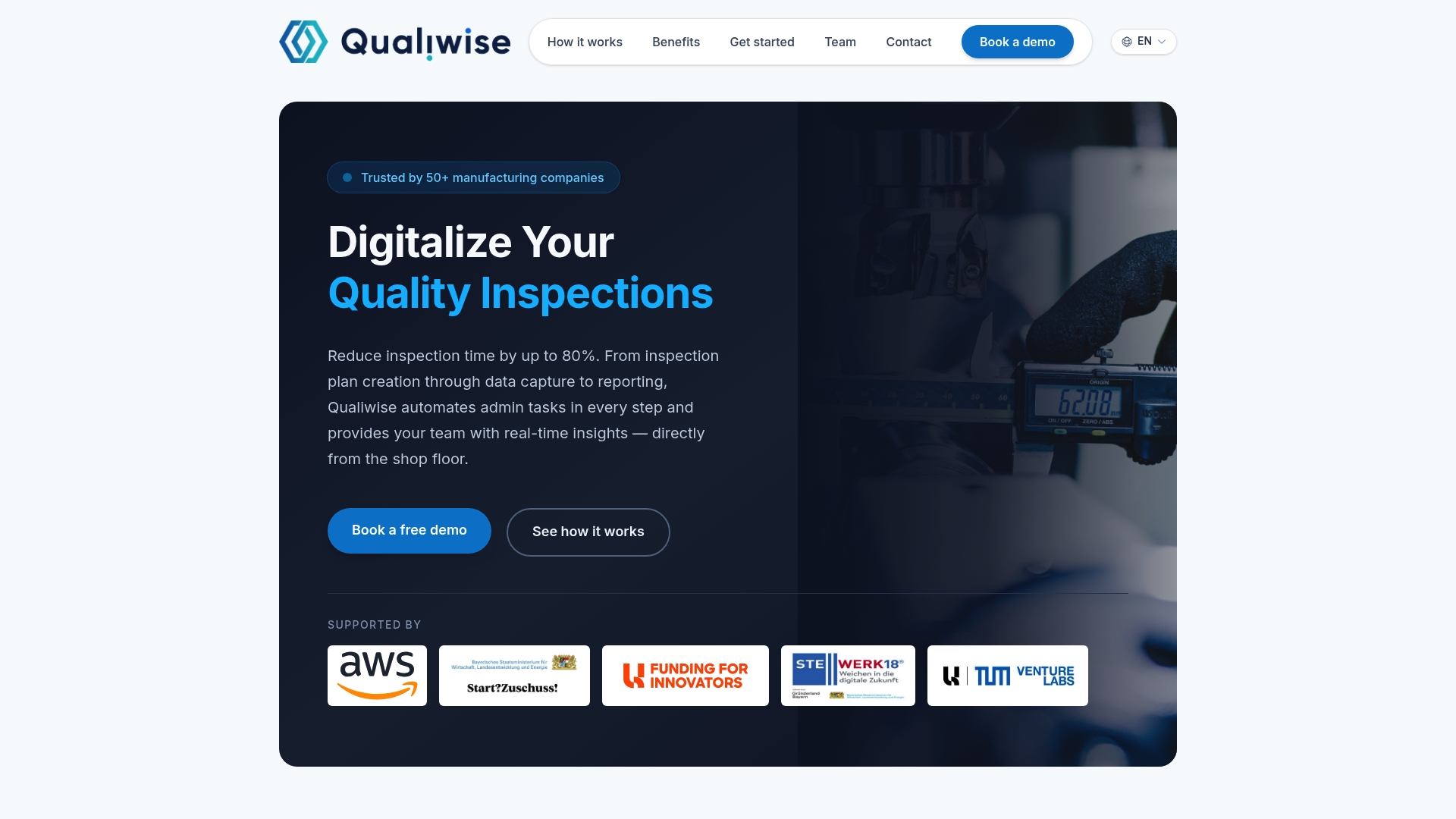
Qualiwise reports reducing inspection time by up to 80%. The vendor states it is trusted by over 50 manufacturing companies. The product positions an AI copilot to speed plan creation, capture shop floor data with photos and guidance, and produce audit-secure reports in real time.
Core Features
The platform creates inspection plans with prompt based automation and lets teams export plans in multiple formats. Inspectors capture quality data on the shop floor with guided steps, photo evidence, and instant sharing to stakeholders. Workflows include automated report generation with audit security, API driven ERP and QMS connectivity, and supplier scaling that allows free supplier access tied to orders.
Key Differentiator
According to the company, Qualiwise can replace 60 80% of manual documentation and requirement checks. That automation claim supports the stated goal of achieving full inspection coverage without adding headcount. The AI copilot and prompt driven plan builder are the clearest places this product diverges from ordinary checklist tools.
Pros
The vendor reports time savings of 50 80% across inspection tasks, which translates to fewer hours spent on plan creation and paperwork. Those reported reductions support real time SPC and earlier nonconformance alerts on the shop floor. Integrations with ERP and QMS systems reduce double entry and let measured data flow into existing quality systems. The guided capture and photo workflow make the tool accessible for shop floor staff with limited tablet experience.
Cons
-
Implementation depends on existing IT infrastructure. Customers with legacy systems will need IT work before full integration.
-
Vendor materials do not list detailed limits on company size or specific industry exclusions. That gap leaves questions for niche manufacturers.
-
The documentation emphasizes integration readiness but does not list an onboarding timeline or a fixed implementation package.
Notable Integrations
- ERP systems
- QMS platforms
These are the explicit integration targets listed by the vendor. No additional third party services are named.
Who It's For
Qualiwise targets manufacturing quality teams that want to move from paper or spreadsheets to guided digital inspections. The product suits both larger plants and small workshops that can provide basic IT connectivity. It also fits teams that must coordinate inspections across suppliers and want supplier access without per supplier licensing fees.
Real World Use Case
The company describes a plant that automated its inspections and reports a 70% reduction in inspection time. That reported outcome reduced manual paperwork, improved early defect detection, and shortened the loop between inspection and corrective action. The example shows how digitized capture and automated reporting improve traceability and follow up.
Pricing
The vendor lists pricing as "Not applicable " informational only. No public tier, starting price, or seat model is published. Prospective buyers should contact the vendor for deployment and licensing details.
Website: https://qualiwise.io
Comparison of alternatives
For manufacturers seeking effective inspection management software, several notable choices provide varying advantages based on workflow needs.
Workflow and Feature Breadth
QA Platform provides advanced traceability through its integration with diverse CMM systems, linking measurement outputs to compliance-ready reports with accuracy. However, competitors such as High QA deliver broader supply chain collaboration tools, offering ERP and CAD-linked workflows that enhance communication and approvals across global networks. Net-Inspect excels at integrating supply chain visibility with inspection records, effectively bridging supplier quality evidence with internal documentation.
Specialization Versus Versatility
GroundControl focuses tightly on compliance within aerospace environments, with FedRAMP and ITAR support and unlimited user scalability. In contrast, FAIRQA emphasizes educational and procedural aspects, delivering industry-aligned guidelines and training modules that streamline team adoption. Qualiwise stands out for ease of access, enabling streamlined transitions from paper-based methods to digital inspections without substantial overhead.
Best fit
- Manufacturers with extensive CMM usage will benefit from QA Platform's automated ballooning and measurement linkage that reduces transcription errors and preparation time.
- Aerospace suppliers requiring stringent compliance under regulatory standards such as FedRAMP may prioritize GroundControl for its focused capabilities.
- Teams seeking rapid deployment and scalable user access across multi-supplier setups should consider High QA.
- Facilities aiming to enhance supplier learning through structured guidance workflows will find FAIRQA suited to their needs.
- Smaller workshops transitioning from manual paper systems could explore Qualiwise for accessible digital adoption.
Our pick
QA Platform emerges as a standout choice for manufacturers prioritizing traceability from measurement systems to compliance documentation. Its AI-assisted auto-ballooning combined with integrated validation workflows uniquely reduce manual effort while enhancing accuracy in reporting. Teams needing integration between inspection and production tracking will find QA Platform exceptionally suited for deployments.
For professionals evaluating options in inspection management software, the following table organizes key features and differentiators of leading platforms:
| Product | Core Features | Key Differentiator | Pricing | Limitation |
|---|---|---|---|---|
| QA-Report | AI auto-ballooning, multi-platform integration | Combines inspection and production management | $49.99/month Basic | Complex initial setup for new users |
| High QA | Real-time analytics, generative AI documentation | High integration with CAD and suppliers | Price not published | Steep learning curve for digital workflows |
| Net-Inspect | AS9102 form automation, SPC analytics | FAI workflow deeply integrated with drawings | Price not published | Limited public reviews for usability |
| GroundControl | AI ballooning, enterprise security compliance | Focused on aerospace and defense requirements | Price not published | Technical support reliability issues raised |
| FAIRQA Platform | AS9102 guidance, workforce training | Unified operating model for FAIs | Price not published | Specialized on aerospace, overkill elsewhere |
| Qualiwise | Prompts automation, guided shop floor capture | AI copilot reduces manual effort | Price not published | Integration readiness requires IT setup |
How Can Inspection Management Software Reduce Errors and Save Time?
Manufacturers and quality engineers face challenges linking ballooned drawing dimensions with measured results while avoiding manual entry errors. QA-Report solves this by automatically linking dimensions to CMM data and flagging out-of-tolerance deviations. The built-in 3D CAD viewer and tolerance validation cut hours of manual work. If your team manages First Article Inspections, dimensional checks, or GD&T reporting, this centralized platform supports aerospace, automotive, and medical device production with audit-ready reports that meet ISO 9001 and AS9100 requirements.
See how automated ballooning and integrated MES features can elevate your quality inspection workflow at QA-Report. Visit QA-Report's website to explore the measurement wizard and discover practical tools that link drawings directly to measured results. Take the next step by importing your CMM data and generating full inspection reports in minutes.
FAQ
What features make QA-Report a strong choice for inspection management software?
QA-Report automates the creation of audit-ready First Article Inspection (FAI) and GD&T reports. Its measurement wizard links ballooned drawing dimensions directly to measured results, which streamlines the inspection workflow. Teams seeking a solution that reduces manual data entry should consider QA-Report.
How does High QA compare to QA-Report in inspection management capabilities?
High QA is trusted by over 1,600 global manufacturing companies and excels in linking design data to inspection workflows. QA-Report, on the other hand, offers a unique AI-powered auto-ballooning feature that simplifies the integration of measurement data, making it more suitable for teams focused on in-depth inspection documentation.
What integration capabilities does QA-Report offer for CMM systems?
QA-Report integrates with popular CMM systems like Zeiss, Mitutoyo, and Hexagon, allowing for direct input of measurement data. This capability ensures that users can maintain traceability from machine outputs to inspection reports, making it a preferred choice for quality professionals.
Which software option is better for aerospace manufacturing: QA-Report or Net-Inspect?
Net-Inspect specializes in auto-populating AS9102 forms, making it advantageous for teams focused on first article inspection. QA-Report stands out by linking each drawing balloon to actual measurement results directly, which may better suit those looking for an end-to-end inspection solution.
How does the pricing of QA-Report compare to other inspection management software?
QA-Report offers tiered pricing with a Free option, $49.99/month Basic, and $149.99/month Pro. This pricing structure enables small teams to start without significant upfront investment, making it a practical choice for organizations seeking budget-friendly solutions.