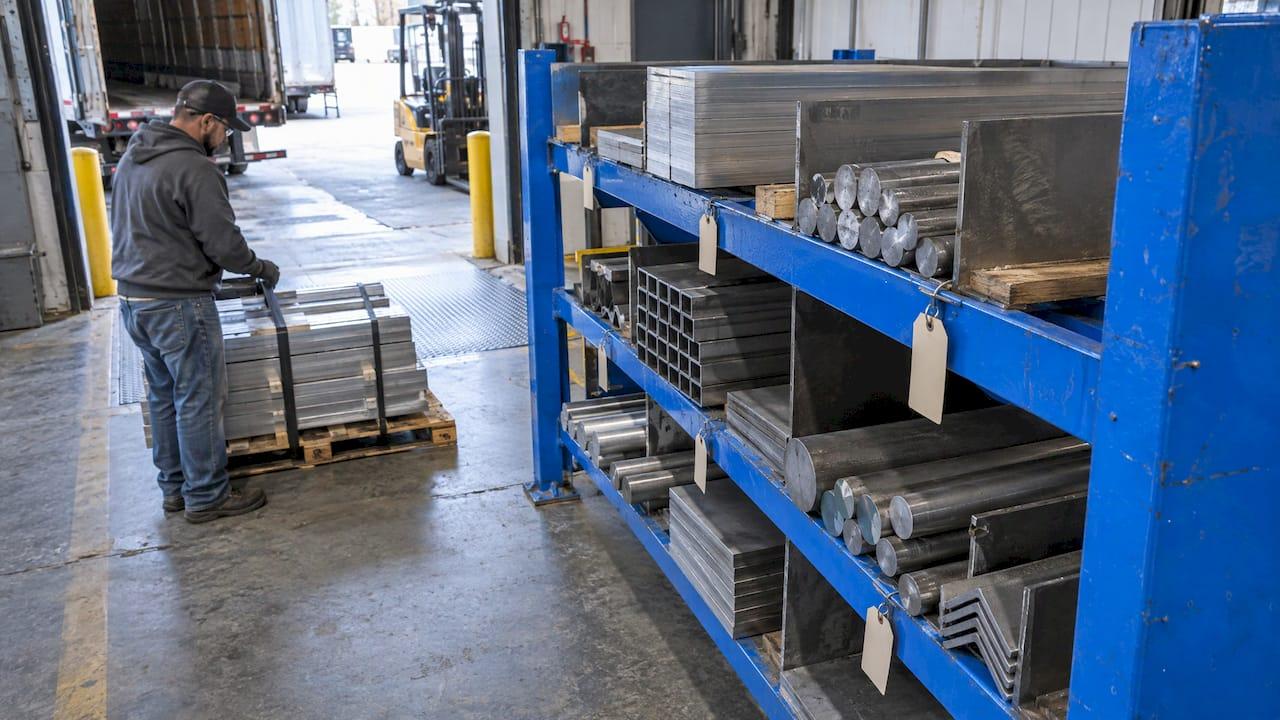
Lot number traceability is the ability to take one lot number and answer two questions fast: which materials went into it, and which customers received it. It works only when every receipt, operation, inspection and shipment record carries the same lot identifier in one system. Manufacturers in aerospace, automotive and medical device production usually reach that point by moving lot records out of spreadsheets and paper travelers into a platform where inspection results, route cards and batch records are linked. QA-Report's platform includes batch and serial tracking, MES route cards and inspection reporting in one place for that reason.
TL;DR
- A lot is a group of items made together under the same conditions. Its number is the key that connects raw material, production steps, inspection results and shipments.
- Lot genealogy is the family tree of a lot: parent material lots going in, child lots and finished goods coming out. Backward and forward traces both depend on it.
- In the US, FDA's Food Traceability Rule defines a traceability lot code and requires records to be produced within 24 hours for covered foods. Other regulated industries set their own expectations.
- Use lot tracking when items are interchangeable within a group. Add serial numbers when a single unit needs its own history.
- Good lot traceability software links lots to inspection data and production routes, not just to a list of numbers.
Table of Contents
- What a lot number is and what traceability adds
- How lot genealogy works
- The lot record: what to capture at each step
- Lot tracking or serial tracking
- Choosing and defining your lot
- Making the trace fast: the speed requirement
- Common lot traceability mistakes
- What lot traceability software should do
- Where QA-Report fits
- Perspective
- A practical rollout in five steps
- FAQ
- Sources
What a lot number is and what traceability adds
A lot is a quantity of product made in one run, from the same material, on the same setup, in a defined period. The lot number, sometimes called a batch number or lot code, is the label that identifies that group. On its own it is just a string of characters. Traceability is what turns it into a record: the lot number is written down at every point where the material is received, changed, tested, moved or shipped.
The US Food and Drug Administration gives a precise definition for food. Under its rule, a traceability lot code is a descriptor, often alphanumeric, used to uniquely identify a traceability lot within the records of the firm that assigned it. FDA's fact sheet adds that the code is similar to what industry already calls a lot or lot code, and that once assigned it cannot be changed unless the food is transformed.
That last point carries over to any plant. A lot number that gets rewritten, shortened or reused at a later step breaks the chain. If the number on the shipping label cannot be matched to the number on the receiving record, the trace stops there.
Lot numbers outside food
The FDA rule is written for foods on its Food Traceability List, so it does not govern a machine shop making titanium brackets or a plant making catheter components. Those producers work under quality system requirements, customer flow-downs and standards such as ISO 9001, AS9100 and IATF 16949, which expect product to be identifiable and traceable through production. The food rule is still a useful model, because it shows the minimum data any lot trace needs: an identifier, the place it was assigned, and records at each step that reference it.
How lot genealogy works
Lot genealogy is the linked history of a lot. Think of a family tree. Each finished lot has parents (the material lots consumed to make it) and may have children (the lots split off from it or built from it). Genealogy lets you walk that tree in either direction.
- Backward trace (upstream): start with a finished lot, or a customer complaint, and find the raw material lots, suppliers, machines and operators involved.
- Forward trace (downstream): start with a suspect material lot, for example a bar stock heat lot that failed a supplier certification check, and find every finished lot and customer shipment that used it.
The forward trace is the one that decides how big a recall or containment action is. Tracing a defect to a single lot lets you contain only that lot instead of everything made that month. FDA makes the same argument for food: it notes that smaller traceability lots might lead to less food being affected in a recall. The rule does not prescribe one way to define a lot, so the manufacturer chooses the lot size and carries the consequences of that choice.
A worked example
A machine shop receives a bar of 7075 aluminum under heat lot H-4471. The receiving record logs the supplier, the heat lot and the quantity. The material is cut and issued to work order WO-2208, which produces 120 housings. The shop assigns production lot L-2208-A to the first 60 and L-2208-B to the second 60 after a tool change. Each lot goes through inspection, and the measurement results are stored against its lot number. Lot L-2208-A ships to customer one, lot L-2208-B to customer two.
Now the supplier reports a certification problem with H-4471.
- Search the heat lot. The system shows it was issued to WO-2208.
- Follow the work order to lots L-2208-A and L-2208-B.
- Follow each lot to its shipments and customers.
- Pull the inspection records for both lots to see whether measured results support keeping them in service.
That chain takes minutes when the links already exist. If receiving data is in one spreadsheet, work orders in another and inspection reports in a folder of PDFs, the same trace is a day of hunting, and the answer is less certain.
The lot record: what to capture at each step
Traceability fails at handoffs. The practical fix is to define what is written down at each event and make sure the lot number appears in it. A workable minimum looks like this:
| Event | What to record | Why it matters |
|---|---|---|
| Receiving | Supplier, supplier lot or heat number, quantity, date, certificate of conformance, receiving inspection result | Starts the upstream chain and ties the certificate to the material |
| Material issue | Work order, material lot consumed, quantity | Links parent lot to production |
| Production operation | Operation, machine, operator, date, quantity in and out | Shows where and how the lot was made |
| In-process and final inspection | Measured values against the drawing, out-of-tolerance flags, disposition | Proves the lot met requirements |
| Rejection and rework | Quantity rejected, reason, recovery action | Keeps counts honest and genealogy intact |
| Packing and shipment | Lot number, quantity, customer, ship date | Closes the forward trace |
FDA's food rule follows the same logic. For covered foods, records at each Critical Tracking Event must include the traceability lot code and key data elements linked to that lot, and the traceability plan must describe how records are maintained and how lot codes are assigned. A Critical Tracking Event is a step such as receiving, transforming or shipping. A key data element is a specific piece of information recorded at that step.
Lot tracking or serial tracking
The difference is the unit of identity. Lot tracking gives one identifier to a group of interchangeable items. Serial tracking gives every individual unit its own identifier.
| Lot tracking | Serial tracking | |
|---|---|---|
| Identifier applies to | A group made together | One unit |
| Typical products | Fasteners, castings, forgings, consumables, high-volume machined parts | Assemblies, engines, implants, instruments, safety-critical parts |
| Recall scope | The whole lot | The single unit, or units sharing a suspect component |
| Record volume | Lower | Higher |
| Precision | Group level | Unit level |
Many plants use both. A serialized assembly carries its own number, and its genealogy lists the lot numbers of the components inside it. That combination gives unit-level history for the finished product and lot-level control of the commodity parts within it. Customer contracts and industry rules often decide which level you need, so read the purchase order and quality clauses before choosing. For a deeper look at the unit-level side, see our guide to serial number tracking in manufacturing, and for the group-level side, our batch traceability compliance guide.
Choosing and defining your lot
The lot definition is the most consequential traceability decision you make, and it is made before any software is involved. Consider these factors:
- Material source: do not mix material from different heat or supplier lots in one production lot unless you accept that the lot then has multiple parents.
- Process conditions: a tool change, a new fixture, a different shift or a recalibration can be reason to close one lot and open the next.
- Time window: many shops cap a lot at a shift, a day or a work order.
- Customer requirements: some customers specify maximum lot size or require a lot per ship date.
- Cost of containment: the larger the lot, the more product is held when something goes wrong.
Write the rule down in a procedure. The FDA rule does not dictate one definition for food, and in manufacturing the same applies: what matters is that the definition is documented and applied consistently, so that an auditor or a customer can see why a lot boundary sits where it does.
Making the trace fast: the speed requirement
A trace that takes a week is a trace that fails. FDA's rule gives a concrete benchmark for covered foods: records must be retrievable and provided to FDA within 24 hours of a request, or within a time FDA agrees to. Even outside food, 24 hours is a sound internal target. Test it by running a mock trace: pick a finished lot at random and time how long it takes to list its material lots, operations, inspection results and shipments.

On timing of the food rule itself: the final rule became effective January 20, 2023, with an original compliance date of January 20, 2026. A Reagan-Udall Foundation report convened at FDA's request notes that FDA proposed extending that date to July 20, 2028. Check FDA's Food Traceability Rule page for the current status if you supply covered foods.
Common lot traceability mistakes
- Renumbering lots between steps. Every new number needs a documented link to the old one, or the chain breaks.
- Recording receipt but not consumption. Knowing what arrived is not the same as knowing what went into which work order.
- Keeping inspection data separate from lot data. A lot trace that cannot show measured results only proves where the part went, not whether it was good.
- Mixing lots at the line without a record. Combining leftover material from two lots creates a lot with two parents that nobody logged.
- Ignoring rejected and reworked quantities. If the count out does not reconcile with the count in, genealogy loses credibility in an audit.
- Relying on one person's spreadsheet. When that person is out, the trace is out.
What lot traceability software should do
Searches for lot traceability software and batch traceability software usually come from teams that have outgrown paper travelers and spreadsheets. The following criteria separate a system that records lot numbers from one that makes traces fast and defensible.
- One lot identifier across modules. Receiving, production, inspection and shipping must reference the same lot record, not copies of it.
- Genealogy in both directions. You should be able to start at a material lot or a finished lot and get the full tree.
- Inspection data attached to the lot. Measured values, tolerance flags and reports belong in the lot record.
- Route and operation history. Which machine, which operation, which operator, and what was rejected or recovered.
- Document control. Certificates, drawings and reports stored with the lot they belong to.
- Role-based access. Receiving, operators, inspectors and quality managers each see and edit only what they should.
- Shop-floor access. Inspectors and operators need to log data at the machine, including from a phone or tablet.
- Validation. For regulated work, the system itself must be shown to do what it is meant to. FDA's guide on computerized systems in food processing says the scope of validation depends on system complexity and potential effect on food safety, and that the aim is consistent performance as intended. The same reasoning applies to any regulated product.
If you are comparing categories of tools, a dedicated quality platform, an ERP module and a standalone inventory system will each handle lots differently. Our overview of production tracking software walks through how those categories differ in practice.
Where QA-Report fits

QA-Report is a cloud-based inspection and quality management platform for manufacturers in aerospace, automotive and medical device production. Its MES layer manages production across parts, batches and operations with route cards, kanban and Gantt planning, and rejection and recovery tracking, with role-based shop-floor access. Batch and serial tracking sit alongside First Article Inspection, dimensional and GD&T reports, so the measured results for a lot live next to its production history. CMM data import brings machine measurements into the same record, and a document vault keeps related files together. Mobile access lets inspectors log results on the floor.
Plans start with a Free tier at $0 per month. Basic is $49.99 per month and PRO is $149.99 per month. On-Premise and Enterprise Solutions are available without published prices, which suits organizations with data confidentiality requirements. Current plan details are on the pricing page.
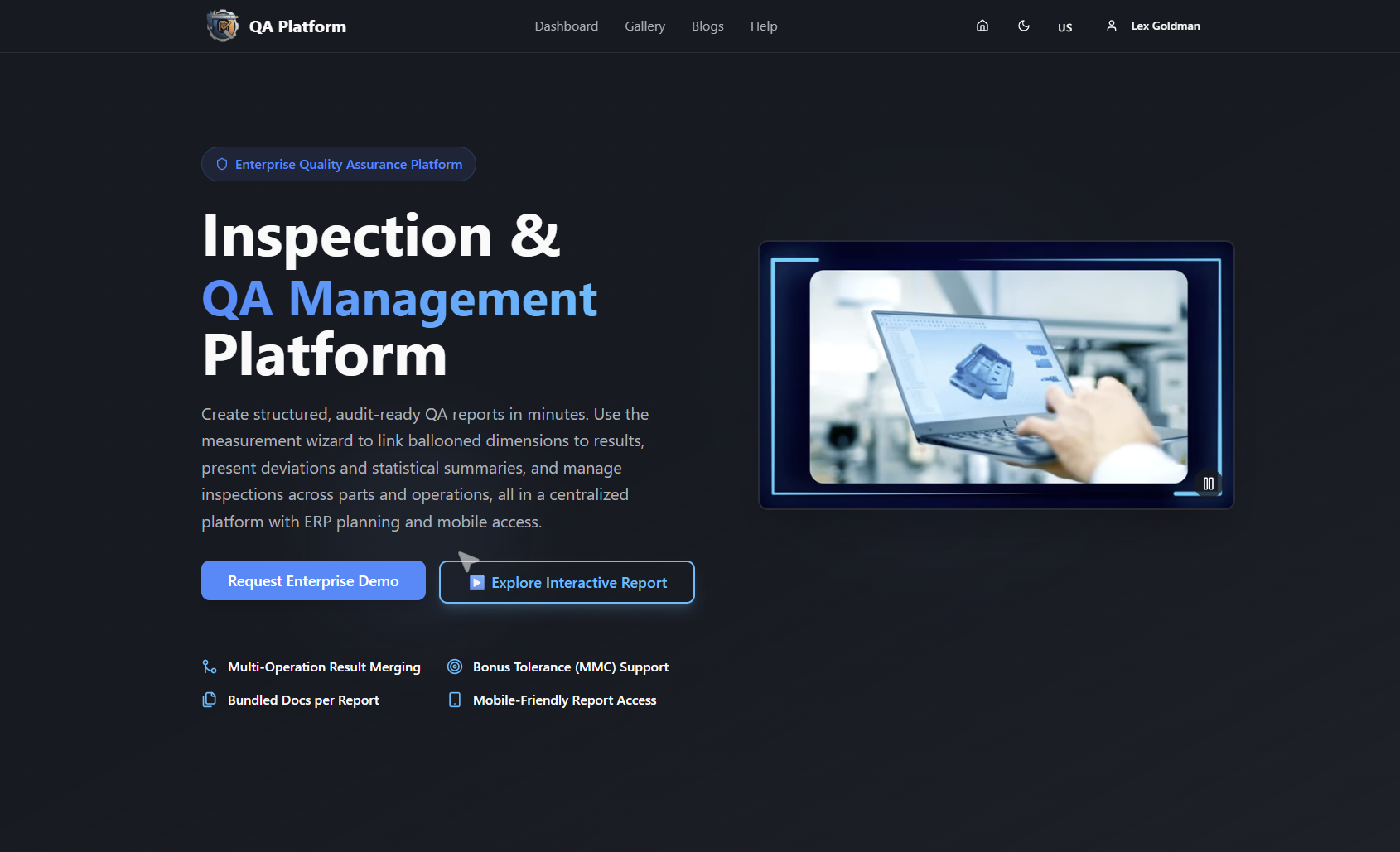
For lot traceability specifically, the practical benefit is that the lot number, the route card, the inspection report and the shipment are not four separate records to reconcile by hand.
Perspective
Most traceability failures we hear about are not failures of intent. The plant knew it needed lot numbers. The problem was that the lot number lived in four places: a receiving log, a traveler, an inspection report and a shipping document, each typed in separately.
Our view is that the lot number should be entered once and followed everywhere. That is why QA-Report puts batch and serial tracking, route cards and inspection reporting in one platform, so a measured result is tied to the same lot as the operation that produced it.
For teams in sensitive industries, we also offer cloud and on-premise deployment, so confidentiality requirements do not force a choice between traceability and control of your data. Start with a single product family, define the lot rule, and run a mock trace. You will quickly see where your records break.
Michael Chen
A practical rollout in five steps
- Write the lot definition. Decide what closes one lot and opens the next, and document it.
- Map the events. List receiving, issue, each operation, inspection, rejection, packing and shipment, and decide what is recorded at each.
- Standardize the identifier. One format, one owner, no renumbering without a documented link.
- Load the data into one system. Start with a single product family so you can see how genealogy behaves before scaling.
- Run mock traces. Pick a random shipped lot, trace it backward and forward, and time it. Repeat after every process change.
FAQ
Can lot numbers be traced?
Yes, if every step recorded the lot number. A trace follows the number through receiving, production, inspection and shipping records. When those records are in one system, a backward or forward trace takes minutes. When they are scattered, tracing depends on how well each handoff was documented.
What is a traceability lot code?
It is FDA's term for the identifier of a traceability lot of food. FDA describes it as a descriptor, often alphanumeric, that uniquely identifies a lot within the records of the firm that assigned it. It is assigned at set points, such as initial packing or transformation, and then stays the same as the food moves through the supply chain.
What is lot genealogy?
Lot genealogy is the linked record of which material lots went into a finished lot and where that lot went afterward. It lets you trace backward to suppliers and materials, or forward to customers, from any lot in the chain.
How do I choose between lot and serial tracking?
Use lot tracking when units in a group are interchangeable and a lot-sized containment is acceptable. Add serial tracking when a single unit needs its own history, as with safety-critical assemblies or when a customer requires it. Many plants serialize the finished assembly and lot-track its components.
How fast should a lot trace be?
For covered foods, FDA requires records to be available within 24 hours of a request, or a time FDA agrees to. That is a sensible internal target for any manufacturer. Timing a mock trace on a random lot shows whether your records meet it.
Sources
- Traceability Lot Code | FDA
- FSMA Final Rule on Requirements for Additional Traceability Records for Certain Foods | FDA
- FDA Fact Sheet: The FDA Food Traceability Rule
- Federal Register, May 19, 2023: Food Traceability final rule
- Reagan-Udall Foundation supplemental report on the FDA Food Traceability Final Rule
- Computerized Systems in Food Processing Industry | FDA