Managing supplier collaboration alongside quality inspection in regulated manufacturing systems wastes time when teams juggle disconnected tools. Many platforms force organizations to stitch together add-ons or pay for features they do not use, with hidden pricing. This comparison details deployment models, reporting controls, and compliance support so quality assurance managers and procurement teams can pick a platform that aligns with their supplier and audit needs.
Table of Contents
QA Platform
At a Glance
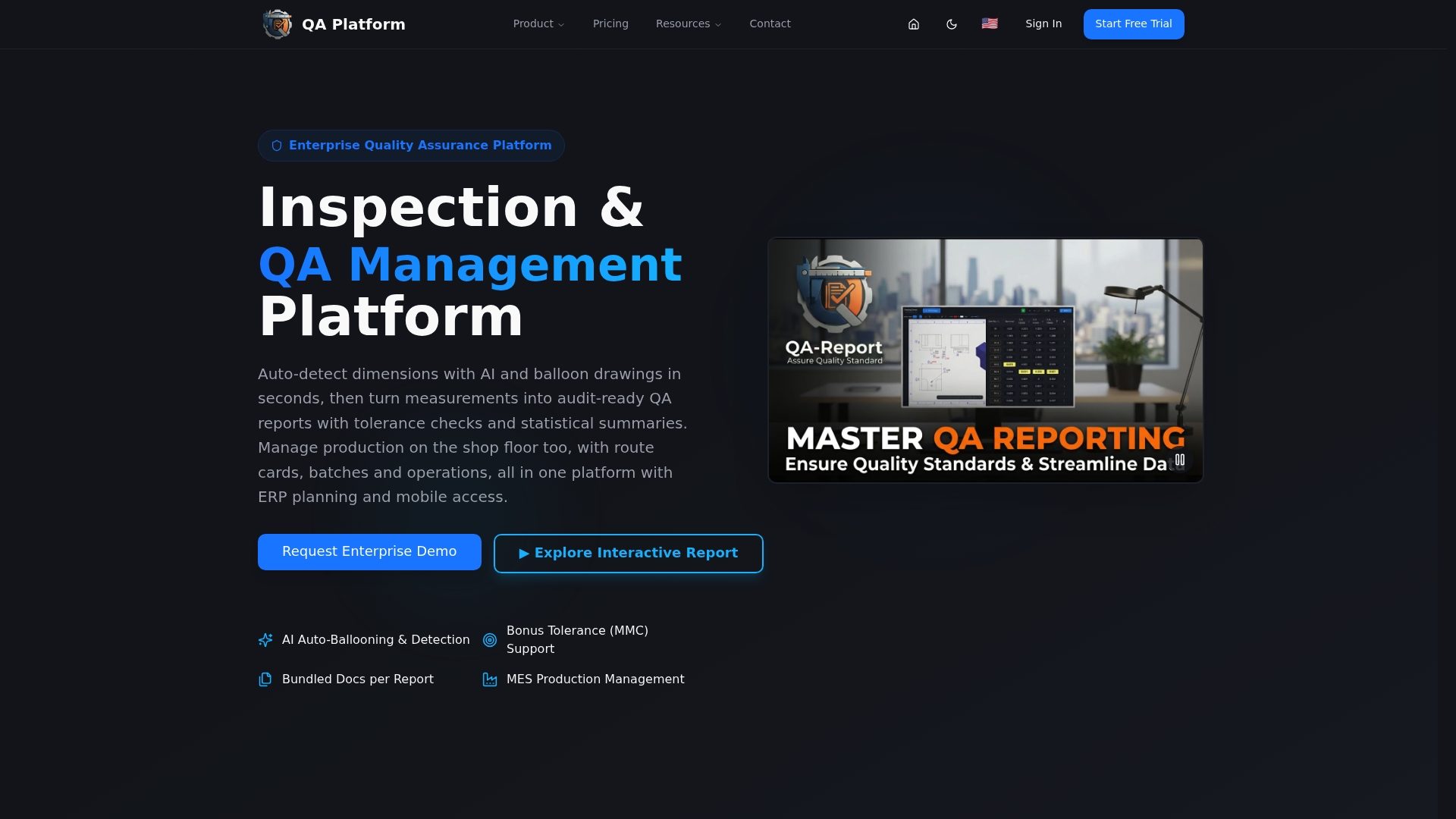
AI auto ballooning identifies and labels drawing dimensions in seconds, cutting hours from manual markup during inspection setup. The platform combines inspection reporting with a production management layer for parts, batches, and operations. It targets precision manufacturing teams in aerospace, automotive, and medical device production.
Core Features
QA Platform links ballooned drawing dimensions to measured results through a measurement wizard, and it auto flags out of tolerance deviations while producing statistical summaries and professional PDF reports. The system accepts multi platform CMM data import and includes a built in 3D CAD viewer for STEP and IGES files. An integrated MES layer provides route cards, Kanban and Gantt planning, rejection and recovery tracking, plus role based shop floor access and mobile inspector workflows.
Key Differentiator
The fastest visible advantage is AI auto ballooning that detects and labels drawing dimensions in seconds, so it removes manual drawing markup. That feature pairs with tolerance validation and a full GD&T engine so dimension detection flows straight into inspection logic and reporting. For teams that spend large blocks of time on drawing preparation, that sequence changes the daily workload.
Pros
The product covers inspection, production planning, and reporting within a single environment, which reduces handoffs between tools. It supports industry formats and standards required for audits, including AS9102, PPAP, ISO GPS, and reporting that maps to ISO 9001 and AS9100 requirements. Automation features reduce manual transcription by linking ballooned dimensions to measured values and importing CMM data directly, while role based user management scales across enterprise teams and interactive reports improve communication with customers and internal stakeholders.
Cons
- The platform may have a steep learning curve because its feature set is extensive, which can slow initial deployment for teams with limited QA tooling experience.
Who It's For
Quality assurance managers, manufacturing engineers, and inspection teams in precision sectors will get the most value. The product fits organizations that must produce audit ready FAI, dimensional, and GD&T reports and that handle CMM measurements and regulated documentation. Smaller shops with limited training budgets may need extra onboarding time.
Unique Value Proposition
The measurement wizard that links ballooned drawing dimensions to measured results and auto flags deviations creates a repeatable chain from drawing to report. That chain reduces manual data mapping and speeds delivery of audit ready FAI and GD&T reports, which lowers the time spent on corrective documentation and supports compliance workflows during product transfers or audits.
Real World Use Case
A manufacturer imports CMM output into QA Platform, runs tolerance validation, and generates a first article inspection report without manual transcription. The team meets aerospace reporting standards while tracking production stages through route cards and Kanban boards, keeping inspectors and planners aligned in real time.
Pricing
Pricing tiers include a Free plan, Basic at $49.99/month, Pro at $149.99/month, and custom enterprise solutions for larger deployments. Enterprise plans are available for teams that need advanced user management, MES features, or bespoke integrations.
Website: https://qa-report.com
Net-Inspect
At a Glance
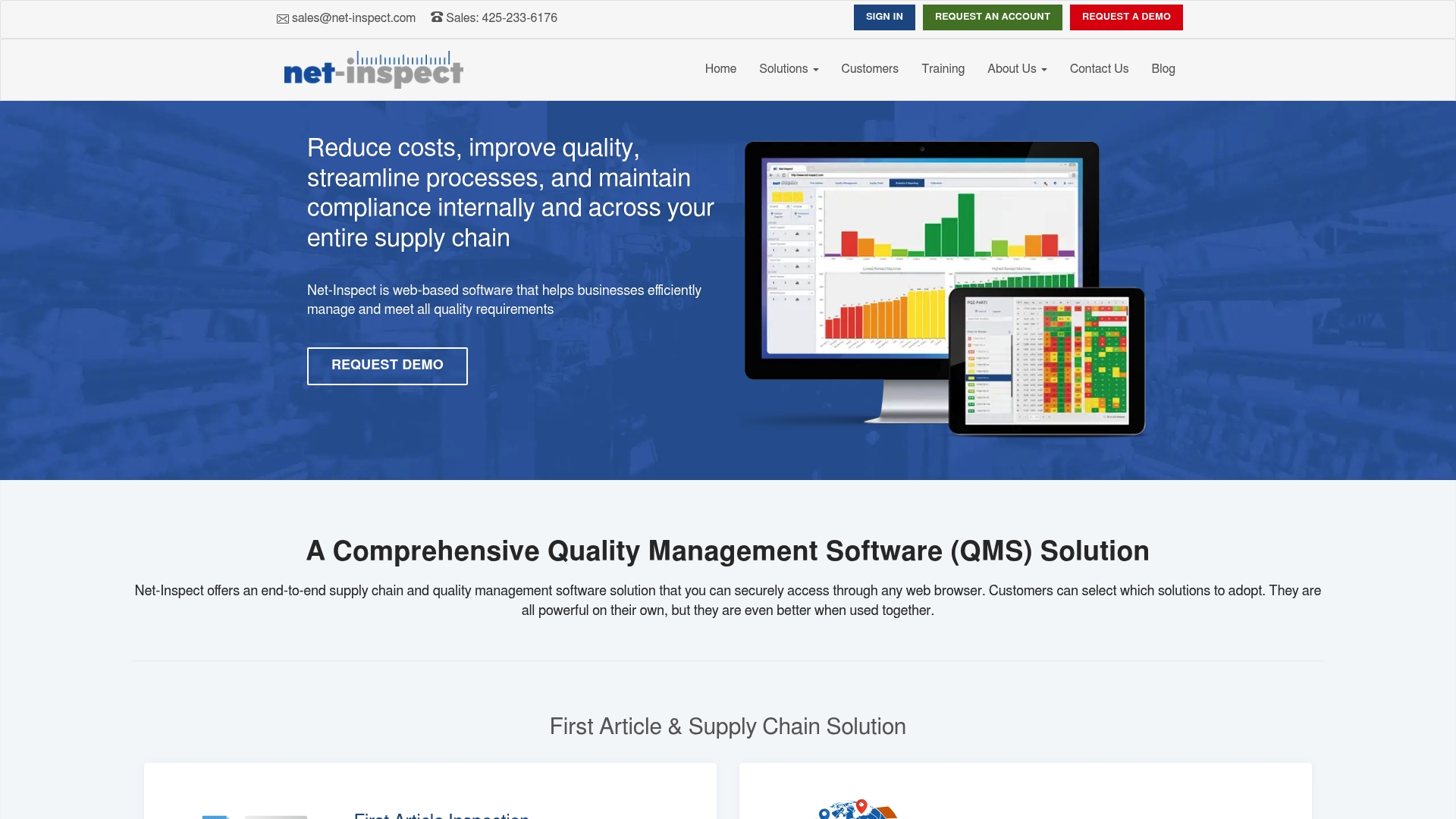
Net-Inspect lets teams pick only the modules they need and run them from any web browser. The modular design pairs supply chain mapping with live inspection tracking and quality workflows. This approach reduces software bloat for complex manufacturing programs.
Core Features
Net-Inspect combines first article inspection management, statistical process control analytics, and non conformance tracking in one web interface. It also includes tool calibration records, machine maintenance tracking, and collaborative APQP and PPAP workflows that link supplier audits to corrective actions. The platform adds eSource shipment documents and quarantine handling so inspectors can record deviations and follow up from the same screen.
Key Differentiator
The platform centers on a module based architecture plus integrated supply chain mapping and real time inspection tracking. That combination lets quality teams trace problems from inspection evidence to affected suppliers on a map. The result is visibility across supplier qualifications, audits, and corrective actions within a single browser session.
Pros
Users report a highly user friendly interface that reduces friction for inspectors and audit teams. The product pairs strong manufacturing oriented features with responsive customer support, which helps shorten time to productive use for complex processes. The modular approach gives procurement and quality leaders flexibility to deploy only the functions their organization needs, and the supply chain mapping tools improve risk visibility for aerospace and automotive suppliers.
Cons
- High cost for some organizations. This may place the product outside budgets at smaller suppliers and contract manufacturers.
- Complex interface for beginners. New users may need guided onboarding or training to use advanced modules.
- Pricing and free trial details are not listed publicly. That lack of transparency can delay procurement decisions.
When It May Not Fit
Net-Inspect may not fit very small manufacturers or suppliers with tight fixed budgets. Teams without dedicated quality administrators could struggle with the learning curve. Organizations that require clear public pricing or a short free trial period may find procurement slower.
Who It's For
Manufacturing companies with complex supply chains, notably in aerospace, automotive, and electronics, will get the most value. The product suits teams that need traceability between inspections, supplier audits, and corrective actions. It also fits firms that want modular deployment instead of a single monolithic suite.
Real World Use Case
An aerospace component manufacturer tracks supplier certifications and links inspection results to supplier corrective action requests. Inspectors upload inspection data and calibration logs from the shop floor while the quality manager monitors supplier risk on the map. That process reduces delays from non conforming parts and centralizes audit evidence for AS9100 reviews.
Pricing
Pricing is not listed publicly. The product description indicates a module based approach, but exact tier details and starting costs are not published on the site.
Website: https://net-inspect.com
Kiuey
At a Glance
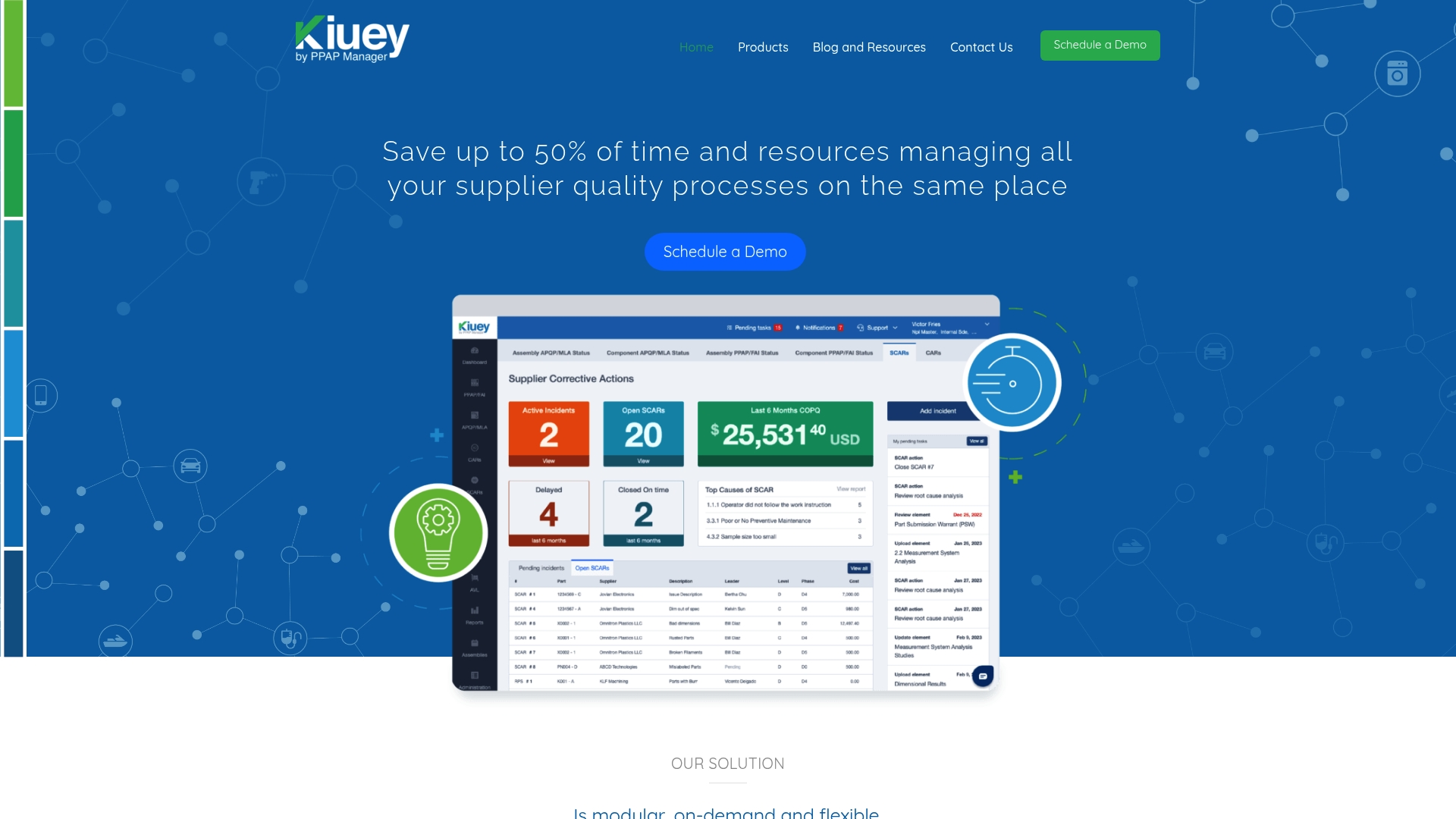
Kiuey reports deployment within 24 hours per manufacturing site or team. The vendor advertises 99.9% uptime for its secure cloud infrastructure. The platform focuses on supplier quality tasks such as PPAP, APQP, supplier audits, incoming inspection, and corrective actions.
Core Features
Kiuey combines modular, process based pricing with automated workflows that cover PPAP, APQP, SCAR CAPA, supplier audits, and incoming inspection. It delivers real time analytics and customizable reporting and integrates with legacy systems while running on a secure cloud platform. The product claims rapid site rollouts and process configuration.
Key Differentiator
That 24 hours deployment claim is the clearest point of differentiation. For teams that must bring sites online or run short pilots across multiple factories, the promised deployment speed reduces setup time and shortens the window between purchase and operational use.
Pros
Flexible, process based pricing lets teams buy only the modules they need, which helps control cost during pilots and staged rollouts. Fast deployment, if that figure holds, shortens the time to compliance and lets inspectors adopt standard workflows quickly. Real time metrics and support for ISO 9001, IATF, and VDA 6.3 give procurement and quality leads clear performance signals for supplier management.
Cons
-
Limited public user reviews make it difficult to assess real world sentiment or common implementation issues.
-
Vendor materials do not list third party integrations in public documentation, so integration details remain unclear.
-
Public information does not report customer shown limitations or common user complaints, which leaves unknowns for complex legacy environments.
Who It's For
Kiuey fits manufacturing quality and procurement teams that need rapid, modular supplier quality controls. Your team will benefit if you run PPAP and APQP cycles and must meet ISO 9001 or IATF standards. The product is suited to organizations that prefer paying for defined processes rather than broad seat licenses.
Real World Use Case
A global automotive supplier implemented Kiuey to automate incoming inspections and monitor supplier performance across multiple sites. That deployment reportedly reduced manual tracking and increased process transparency while aligning records to IATF and ISO requirements. Quality leaders used real time reports prioritizing corrective actions and track quality costs.
Pricing
Pricing is process based, with buyers paying only for the modules they use. This model supports pilots and staged rollouts because costs scale with adopted processes and sites. Specific per process rates are not listed in public materials.
Website: https://kiuey.com
Supplios
At a Glance
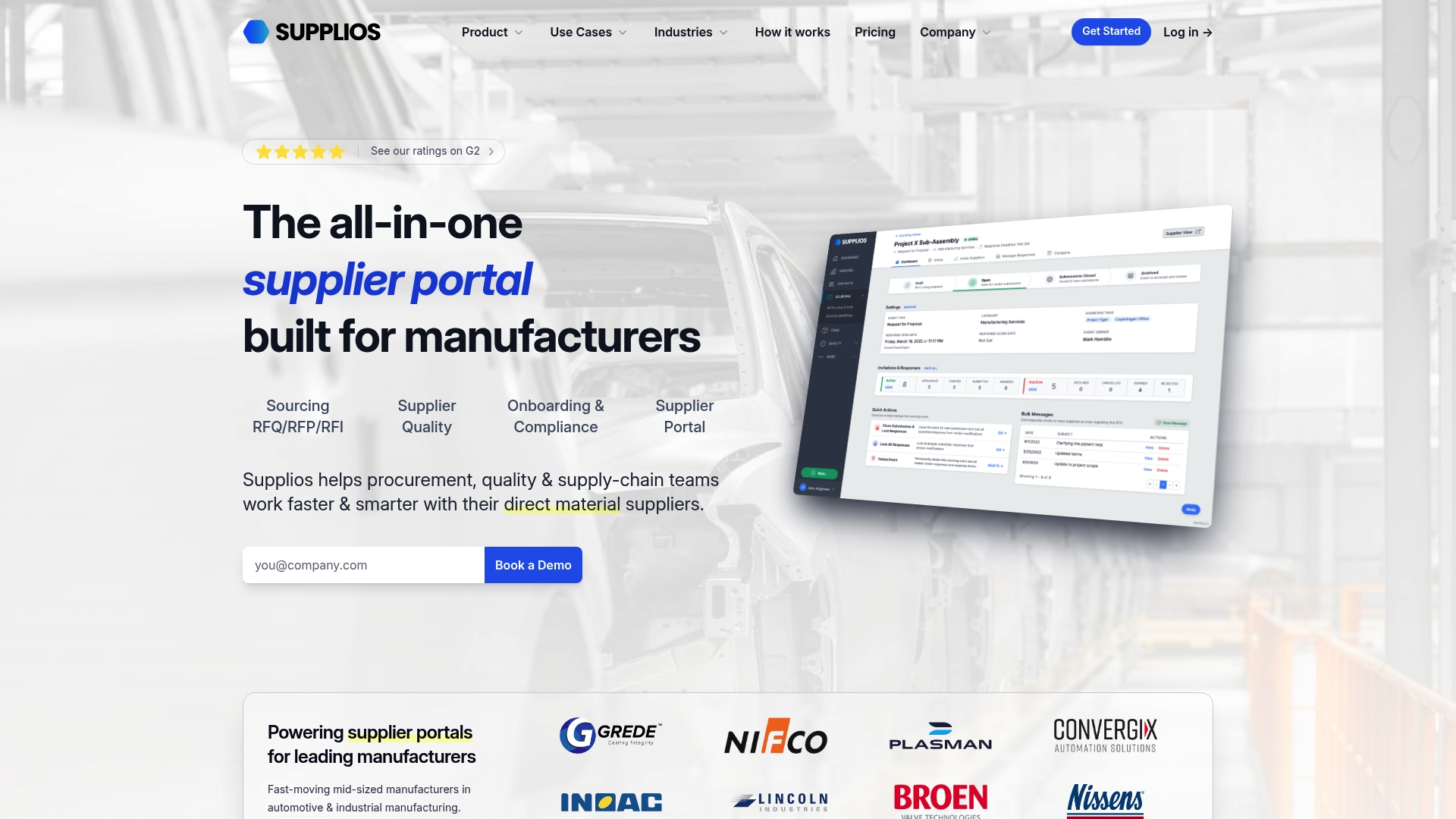
The Basic plan starts at $1,000/month. The vendor advertises that Supplios is trusted by leading manufacturers. The platform combines a supplier portal with sourcing and supplier quality workflows to give procurement and quality teams a single place to work.
Core Features
Supplios centralizes supplier communications, onboarding, and compliance tracking inside a configurable supplier portal. It handles RFQ / RFP / RFI management and includes order and delivery controls with ERP integration capabilities. Supplier quality processes cover 8D, SCAR, PPAP, APQP plus performance monitoring with scorecards and KPIs and built in cost breakdown and comparison tools.
Key Differentiator
Supplios stands out for a configurable portal that links sourcing and supplier quality in one deployment. That architecture reduces handoffs between teams and lets templates and workflows adapt to manufacturing approvals and quality sequences. The design favors mid-sized manufacturers that need both sourcing controls and formal supplier quality processes in a single environment.
Pros
Responsive customer support and guided onboarding reduce dependence on internal IT during the first weeks. Integration capability with ERP, PLM, and QMS systems keeps procurement and quality data aligned across enterprise systems. The platform supports detailed cost analysis and BOM sourcing, making complex RFQs and supplier comparisons easier to manage. Configurable modules let larger teams add sourcing, quality, or performance reporting without replacing existing systems.
Cons
- Limited external documentation may require extra vendor support during onboarding. This slows teams that prefer self service.
- Initial implementation can be slower when deep customization is needed. Complex workflows add setup time.
- Some users report the setup process feels complex when they build bespoke supplier workflows.
When It May Not Fit
If your team expects a fully documented self service portal out of the box, this product may demand more vendor involvement. If you need an immediate, no customization deployment for a small supplier base, the implementation time may be longer than acceptable. If your project cannot budget vendor-led setup, consider simpler tools with extensive public documentation.
Who It's For
Procurement and quality teams at mid sized automotive and industrial manufacturers will get the most from Supplios. The platform matches teams that run formal supplier quality programs and handle complex RFQs or BOM sourcing. It fits organizations that plan vendor assisted onboarding and want ERP integration.
Real World Use Case
A Tier 1 automotive supplier used Supplios to centralize RFQs, capture supplier corrective actions, and track performance on scorecards. The team replaced spreadsheet workflows with portal workflows for 8D and PPAP activity. That shift brought clearer supplier accountability and tighter visibility into sourcing decisions.
Pricing
Pricing starts at $1,000/month for the Basic plan. Higher tiers and enterprise setups are priced by module and customization, so the vendor provides tailored quotes for advanced needs.
Website: https://supplios.com
Comparison of alternatives
In choosing among supplier collaboration platforms, QA Platform stands out for its AI-powered automation capabilities that significantly improve inspection setup efficiency. Competitors such as Net-Inspect, Kiuey, and Supplios present distinct advantages in modular deployment, rollout speed, and sourcing integration, respectively, ensuring options tailor-made to organizational needs.
Automation vs. Flexibility
QA Platform excels in automation by rapidly ballooning dimension drawings and linking them to inspection data, streamlining workflows compared to other platforms. Net-Inspect offers flexibility with selectable modules catering to specific operational needs, suitable for organizations managing complex supply chains needing segmentation rather than a unified suite.
Rollout Speed and Integration
Kiuey claims the fastest rollout time within 24 hours per site without sacrificing essential compliance features. For teams needing quick deployments across facilities, this advantage ensures minimal downtime in transitioning to standardized processes. Conversely, Supplios offers integration solutions aligning sourcing and supplier quality workflows within a centralized portal, advantageous for procurement teams emphasizing collaborative sourcing management.
Best fit
- Manufacturing teams requiring advanced automation paired with production planning should choose QA Platform.
- Organizations managing complex supply chains needing modular deployment would benefit from Net-Inspect.
- Teams needing rapid multi-site deployment and compliance would find Kiuey's offerings advantageous.
- Procurement groups emphasizing integrated sourcing workflows alongside detailed supplier metrics will prefer Supplios.
Our pick
QA Platform is the top recommendation for teams seeking automation-driven workflows that create links between inspection data and production planning. While other systems excel at specific dimensions, QA Platform's automated dimension identification and its integration capabilities offer efficiency for precision-focused manufacturing environments.
Selecting the right quality inspection software for your organization involves comparing their core features, advantages, and limitations based on your unique needs.
| Product | Core Feature | Key Differentiator | Pricing | Notable Limitation |
|---|---|---|---|---|
| QA-Report | Integrated inspection and production management | AI auto ballooning for drawings | Free, Basic $49.99/month, Pro $149.99/month, Enterprise Custom | Steep learning curve for teams without QA experience |
| Net-Inspect | Supply chain mapping and inspection tools | Module-based architecture for customization | Price not published | High cost and lack of public pricing information |
| Kiuey | Supplier quality tasks automation | Deployment within 24 hours | Price not published | Limited public user reviews and integration details |
| Supplios | Combined supplier portal and quality workflows | Configurable templates streamline approvals | Starting at $1,000/month | Setup process complex for customized workflows |
Finding the Right Supplier Collaboration Platform for Your Team
Quality assurance managers and manufacturing engineers face challenges in linking inspection data with supplier performance and audit readiness. Complex supplier collaboration platforms can delay setup and obscure traceability. QA-Report offers a centralized system designed specifically for aerospace, automotive, and medical device production teams. It reduces manual work by automating drawing ballooning, linking ballooned drawing dimensions to measurement results, and generating audit-ready reports that meet ISO 9001 and AS9100 standards.
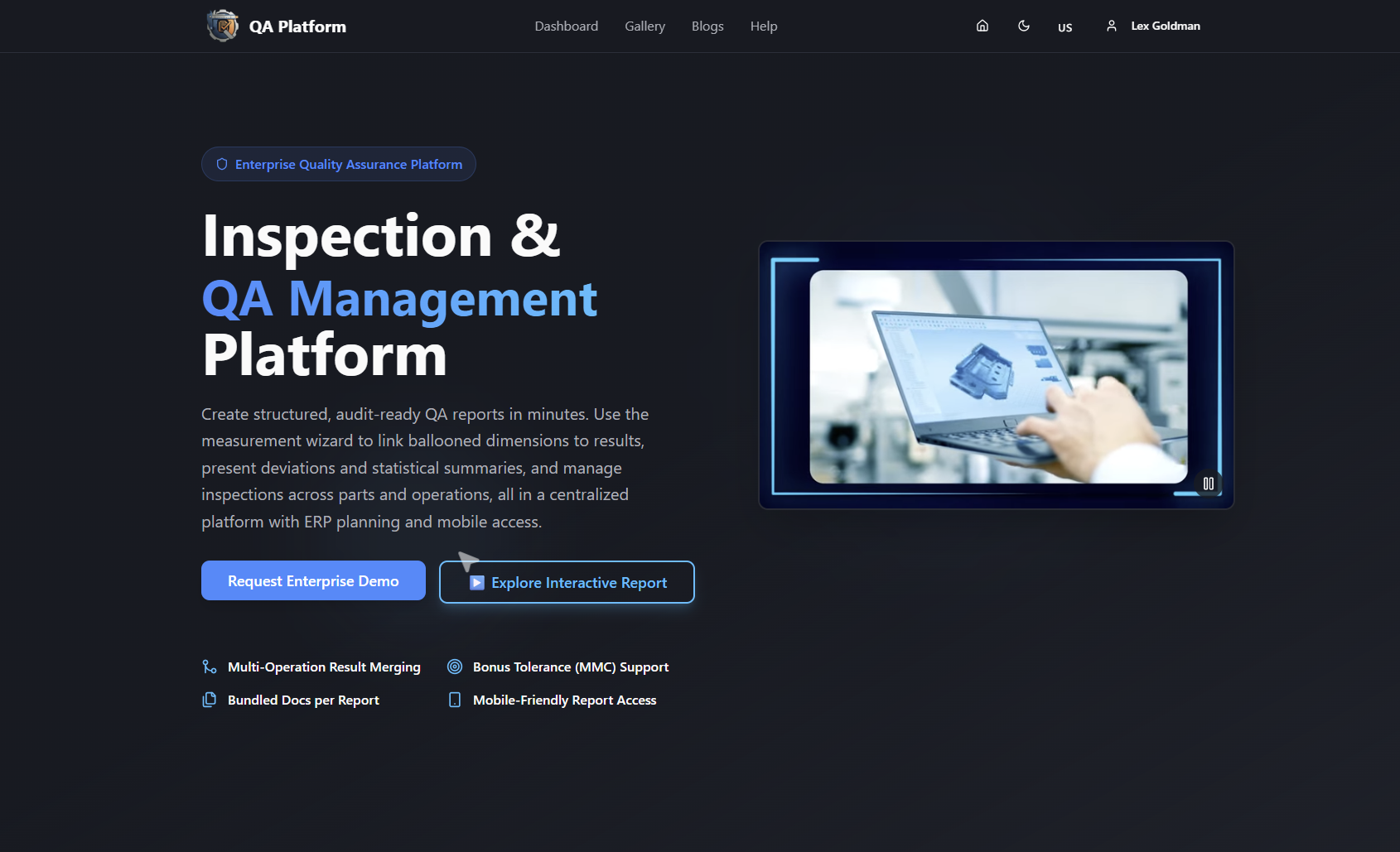
QA-Report’s integrated MES tools keep production and inspection aligned through role-based access and mobile workflows. Visit QA-Report to see how your quality and inspection teams can cut hours of manual markup while maintaining full traceability from drawings to reports. Evaluate the platform’s AI auto ballooning and CMM data import features to improve your first article inspection process quickly.
FAQ
What unique feature does QA-Report offer for dimension detection?
QA-Report features AI auto ballooning that detects and labels drawing dimensions in seconds. This automatic labeling removes the need for manual drawing markup, significantly accelerating the inspection process. Teams can expect reduced setup time when preparing for inspections.
How does QA-Report compare to Net-Inspect in terms of user experience?
Net-Inspect is praised for its highly user-friendly interface, making it less cumbersome for inspectors and audit teams. In contrast, QA-Report’s strength lies in its integrated reporting and AI features, which are ideal for teams focused on thorough inspections and compliance reporting. Organizations can choose QA-Report for a comprehensive approach to quality assurance that aligns well with the demands of precision manufacturing.
Which platform is more suitable for real-time analytics, QA-Report or Kiuey?
QA-Report excels with its comprehensive measurement wizard, linking ballooned drawing dimensions to measured results and auto flagging deviations. Kiuey does provide real-time analytics, but QA-Report’s auto flagging feature ensures faster identification of issues, enhancing the efficiency of quality control processes. Teams needing quick verification and adjustment in inspection reporting should consider QA-Report as a strong option.
Can Supplios handle complex supplier quality processes effectively?
Supplios combines RFQ/RFP management with performance monitoring and supplier quality processes like APQP and PPAP. While QA-Report focuses on inspection and production planning, Supplios is better suited for firms that prioritize supplier integration and management. Depending on your team’s specific needs, Supplios might be a better fit if supplier collaboration is a priority.
What pricing tiers does QA-Report offer compared to its competitors?
QA-Report’s pricing includes a Free plan, as well as tiers at $49.99/month for Basic and $149.99/month for Pro. This tiered structure allows teams of varying sizes to find a suitable option. In contrast, Supplios begins at $1,000/month, which may be cost-prohibitive for some smaller organizations. QA-Report offers a more accessible entry point, especially for teams working with limited budgets.