
AS9145 requires two things from every aerospace supplier: a five-phase Advanced Product Quality Planning (APQP) process and a maintained Production Part Approval Process (PPAP) file with 11 core elements. Everything else in the standard exists to support those two obligations.
- APQP has five phases — Planning through Ongoing Production/Feedback.
- PPAP is the output, not a separate program — it confirms the part is ready at your customer's demand rate.
- The PPAP file stays "live." You update it whenever product or process changes occur, and you notify your customer.
Immediate next step: Pick one active new product introduction (NPI) or process change on your floor right now and map it against the 11 PPAP elements below. If you find gaps, you've just found your audit risk before an auditor does.
Key Takeaways
AS9145 compliance succeeds when APQP deliverables are built progressively across all five phases and consolidated into a continuously maintained 11-element PPAP file.
| Point | Details |
|---|---|
| Five APQP phases | Planning, design, process development, validation, and ongoing production each carry required deliverables and owners. |
| PPAP has 11 core elements | From design records to the Approval Form, all 11 elements make up the complete submission package. |
| The file stays live | Update the PPAP file and notify customers whenever a product or process change occurs, with a revision plan for gaps. |
| Auditors fold this into AS9100 | AS9145 is rarely a standalone audit; evidence typically gets reviewed inside AS9100 or AS13100 assessments. |
| QA-Report speeds assembly | The platform automates FAIR, capability, and CMM data capture into audit-ready PPAP exports. |
Table of Contents
- What Does AS9145 Actually Require?
- What Are the Five APQP Phases?
- What Belongs in a Complete PPAP File?
- Who Owns Documentation and Change Notification?
- How Do You Roll Out AS9145 for a New Project?
- How Does Inspection Software Support AS9145 Deliverables?
- Where QA-Report Fits Into Your AS9145 Workflow
- Where Can You Get the Official AS9145 Standard?
- Frequently Asked Questions About AS9145 Requirements
- Sources
What Does AS9145 Actually Require?
AS9145: Aerospace Series – Requirements for Advanced Product Quality Planning and Production Part Approval Process covers exactly what its title says: a structured methodology for planning new or changed parts (APQP) and a formal approval mechanism proving the part can be produced at the required rate (PPAP). It applies across aviation, space, and defense supply chains, and it was first published by SAE International in November 2016.
AS9145 doesn't operate in isolation. It sits inside the AS9100-series ecosystem, and each standard covers different ground:
- AS9100 provides the quality management system foundation that AS9145 activities plug into.
- AS9102 governs the First Article Inspection Report (FAIR), one of the 11 required PPAP elements.
- AS9103 covers variation management, which feeds directly into your control plan and capability data.
- AS9110 applies where maintenance, repair, and overhaul organizations need equivalent product quality planning.
BSI Group notes that AS9145 is designed to integrate with the AS9100-series rather than replace any part of it, and that its requirements sit alongside whatever contractual and statutory obligations your customer already imposes.
What Are the Five APQP Phases?
SAE's AS9145 defines APQP as a five-phase methodology, and each phase produces specific, checkable deliverables rather than vague "progress." IAQG frames these phase gates as multidisciplinary readiness reviews that judge manufacturability and supplier risk, not just drawing conformance.
- Planning. Define customer requirements, feasibility, and program risk. Deliverables: preliminary process flow, initial risk assessment, program timing plan. Typically owned by program management with design engineering input.
- Product design and development. Translate requirements into a producible design. Deliverables: design records, Design Failure Mode and Effects Analysis (DFMEA), design verification plan. Owned by design engineering.
- Process design and development. Build the manufacturing process around that design. Deliverables: process flow diagram, Process Failure Mode and Effects Analysis (PFMEA), preliminary control plan, packaging standards. Owned by manufacturing engineering, with quality co-signing the PFMEA.
- Product and process validation. Prove the process actually works at rate. Deliverables: Measurement System Analysis (MSA), initial process capability studies, First Article Inspection Report (FAIR), the finalized control plan. Owned jointly by quality engineering and manufacturing.
- Ongoing production and feedback. Monitor the process in steady-state production and feed lessons learned back into the system. Deliverables: statistical process control data, corrective action records, customer satisfaction feedback. Owned by production and quality together.
IAQG's SCMH guidance maps these phase activities to their deliverables in an Appendix B-style table, which is worth pinning to your internal gate-review template. Procurement should sit in on phases one and three at minimum, since supplier flow-down risk usually surfaces there first.
What Belongs in a Complete PPAP File?
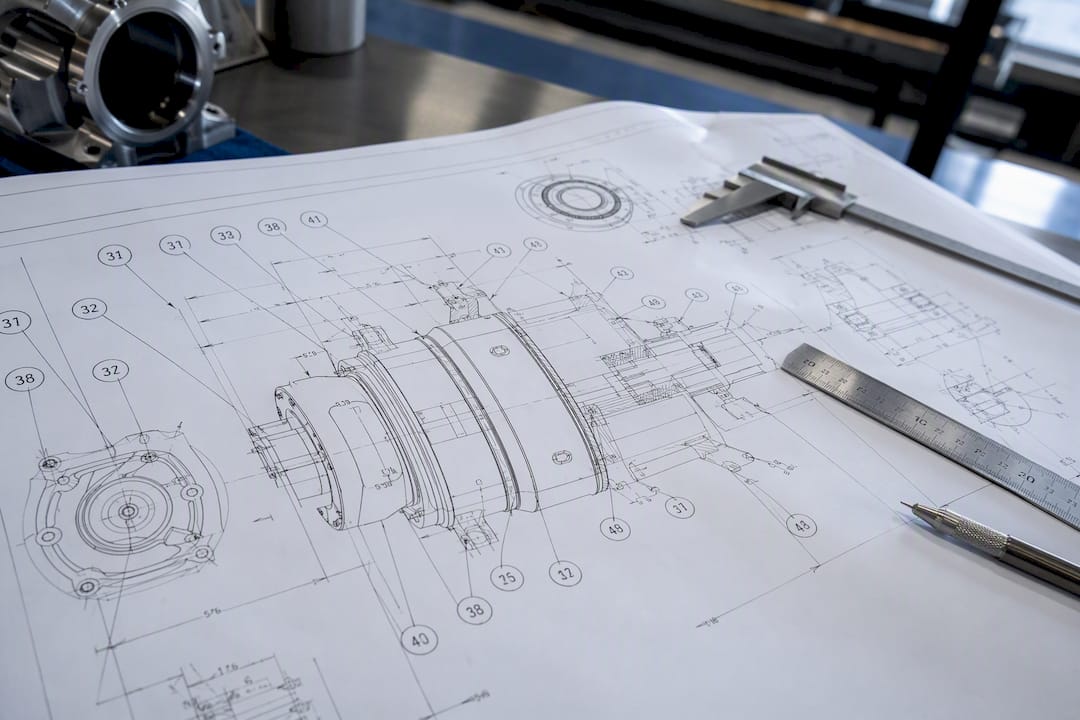
PPAP isn't a form you fill out at the end. It's the accumulated proof, built across all five APQP phases, that the part is ready for production at rate. IAQG describes PPAP as the output that confirms production readiness at customer demand rate — meaning a PPAP assembled entirely in the final week before shipment usually can't demonstrate what it's supposed to demonstrate.
The PPAP file consists of 11 core elements:
- Design records — the current drawing, model, or specification package.
- Design risk analysis — typically the DFMEA, showing design-stage risk mitigation.
- Process flow diagram — the sequence of operations from raw material to shipment.
- PFMEA — process-level failure modes, effects, and controls.
- Control plan — the document tying inspection points, frequencies, and reaction plans together.
- Measurement System Analysis (MSA) — gauge repeatability and reproducibility studies.
- Initial process capability studies — statistical proof the process holds tolerance.
- Packaging and labeling evaluation — confirms the part survives shipping intact.
- First Article Inspection Report (FAIR) — the AS9102 dimensional and characteristic verification.
- Customer-specific requirements — anything contractually layered on top of AS9145 itself.
- PPAP Approval Form — the Part Submission Warrant, the signed cover document declaring the file complete.
Submissions are typically scoped by level. Level 1 may require only the warrant. Level 2 adds sample parts and limited supporting data. Level 3, the most common for aerospace, requires the full 11-element file. A customer disposition comes back as approved, interim approved (production can continue while a specific gap closes), or rejected, which halts shipment until resolved.
Who Owns Documentation and Change Notification?
A PPAP file isn't a one-time deliverable you file away after approval. It's a living record, and you're responsible for keeping it current for as long as your contract or applicable regulation requires.
- Keep the PPAP file accessible, whether stored locally or referenced to an alternate location your customer can audit on request.
- Confirm retention periods against your contract terms; aerospace programs commonly run well beyond the production life of the part.
- Any product or process change, a new tool, a relocated supplier, a revised control limit, can trigger a delta PPAP.
- If any required element is incomplete at the time of a change, document a revision plan showing when it will close.
Compliance here is continuous rather than a single event: suppliers are expected to maintain a live PPAP file and notify customers whenever a documented change occurs. AS9145 rarely gets audited as a standalone certification — assessors typically fold APQP/PPAP evidence into AS9100 or AS13100 audits, and those auditors must hold IAQG-mandated competency credentials.
Pro Tip: Build a single index page that links every PPAP element to its file location and revision date. Auditors spend more time hunting for evidence than judging it, so a five-minute index page can shave an hour off an audit day.
How Do You Roll Out AS9145 for a New Project?
Rolling out AS9145 compliance works best as a sequence with named owners at each gate, not a checklist someone races through the week before shipment.
- Kickoff (week 1). Program management confirms customer requirements and assigns phase owners.
- Planning gate (weeks 2–4). Risk assessment and preliminary process flow reviewed cross-functionally.
- Design and process development (weeks 4–12, complexity-dependent). DFMEA, PFMEA, and control plan drafts move in parallel.
- Validation (weeks 8–20). MSA, capability studies, and the FAIR get executed on production-representative parts.
- PPAP submission and gate review. Quality assembles the 11-element file and submits per the required level.
Suppliers driven by AS13100 mandates have found this timeline compresses fast once an OEM makes full APQP compliance a contractual requirement for new programs, so building the cadence in early avoids a scramble later.
- Flow down AS9145 obligations to your own sub-tier suppliers in writing, not by assumption.
- Verify capacity and capability claims with actual run-at-rate data, not projected numbers.
- Get design, manufacturing engineering, and quality sign-off at every gate, not just at final submission.
- Confirm packaging and labeling evaluation before first shipment, not after a customer complaint.
How Does Inspection Software Support AS9145 Deliverables?
Several PPAP elements, the FAIR, capability studies, and MSA in particular, are data-heavy and repetitive across parts, which makes them prone to manual transcription errors. A platform built for AS9102 first article inspection reporting can shorten that work considerably.
- Automated drawing ballooning maps drawing dimensions to a measurement plan without manual numbering.
- CMM data import pulls measured results straight into the FAIR, cutting transcription risk.
- Built-in capability and statistical summaries turn raw measurements into the studies your PPAP file requires.
- Exported PDF reports assemble into an audit-ready package rather than a folder of loose spreadsheets.
Pro Tip: When you export your FAIR or capability data for a customer's PPAP portal, keep the native report format available as an alternate location reference. Some customer systems only accept summary PDFs, but auditors often want to trace back to the underlying measurement record.
A Quality Manager's View on Living With PPAP
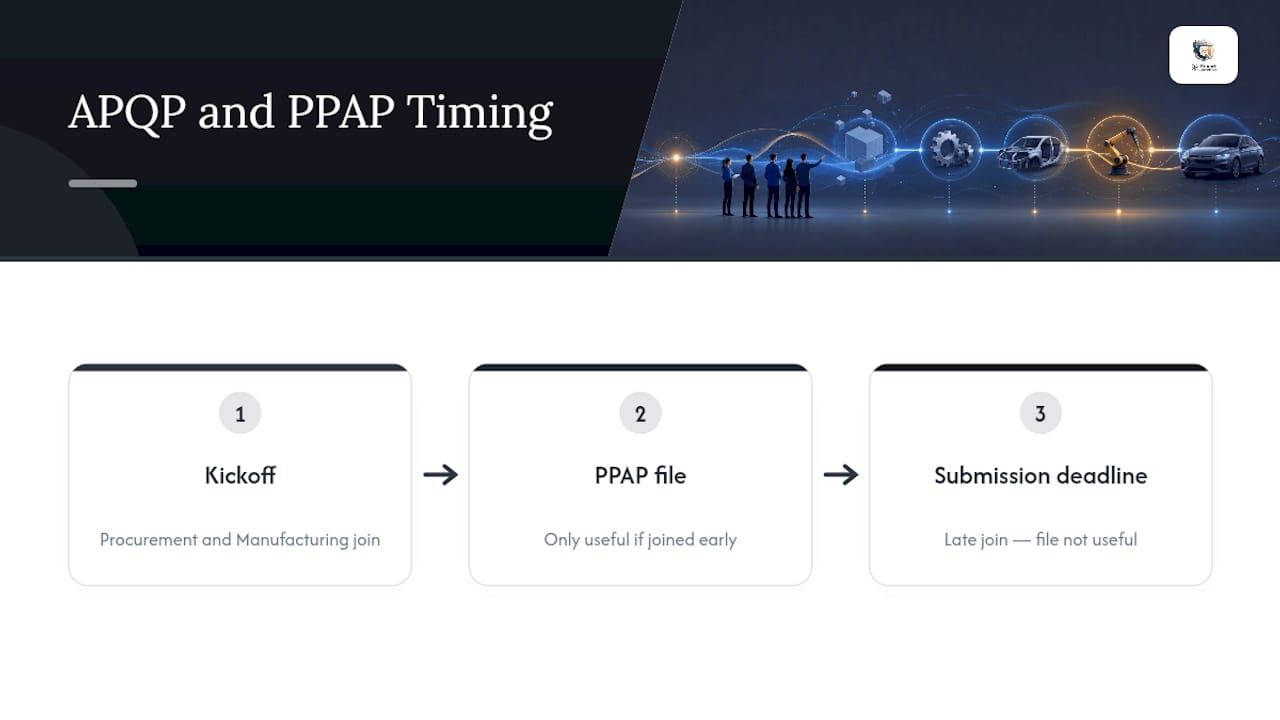
Implementing APQP taught me the file only stays useful if procurement and manufacturing join at kickoff, not at the submission deadline.
Where QA-Report Fits Into Your AS9145 Workflow
If you're piecing together FAIR reports, capability studies, and control plan data across spreadsheets and separate CMM software, PPAP assembly turns into weeks of manual reconciliation instead of days. QA-Report is built specifically to close that gap for aerospace suppliers who need audit-ready PPAP files without hiring extra hands to build them.
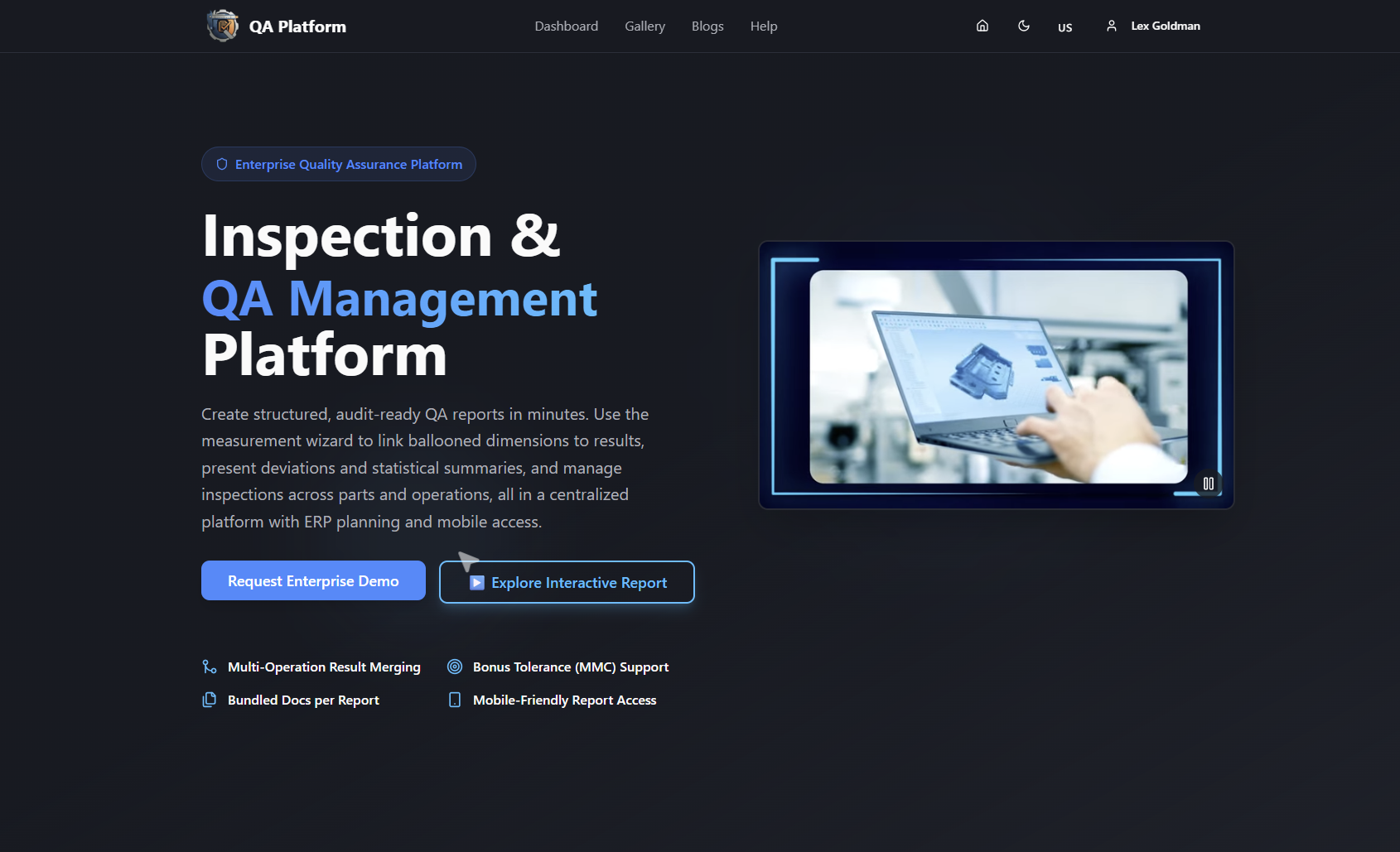
The platform's measurement wizard links ballooned drawing dimensions directly to measured results, auto-flags anything out of tolerance, and generates the statistical summaries your capability studies require. Its AS9102 FAIR support and CMM data import eliminate the manual re-entry that causes most transcription errors in a PPAP package. Everything exports as a professional PDF report structured to satisfy AS9100 and PPAP requirements, with full traceability if a customer or auditor asks where a number came from.
If your team is assembling its next PPAP file by hand, start a trial and run one real part through QA-Report's measurement wizard to see what a completed FAIR looks like in minutes instead of hours.
Where Can You Get the Official AS9145 Standard?
- SAE International publishes and sells the official AS9145 standard, first released in November 2016.
- IAQG's SCMH portal offers phase-to-deliverable mapping guidance that supplements the standard's own appendices.
- Standards resellers list the full table of contents and edition details if you need to confirm scope before purchasing.
Frequently Asked Questions About AS9145 Requirements
Is AS9145 certification required, or is it a self-assessed standard? AS9145 itself isn't certified as a standalone scheme. Auditors typically evaluate your APQP and PPAP evidence as part of a broader AS9100 or AS13100 audit rather than issuing a separate AS9145 certificate.
How is AS9145 different from the automotive PPAP standard? AS9145 was written specifically for aviation, space, and defense supply chains and ties directly into the AS9100-series QMS structure, including AS9102 for first article inspection, rather than the automotive industry's separate framework.
When exactly does a supplier need to submit PPAP under AS9145? PPAP submission is typically required for new part introductions, and again whenever a change affects design, process, tooling, location, or a supplier in the chain, at the level your customer contract specifies.
What happens if a customer issues an interim PPAP approval? Interim approval lets production continue while one specific gap in the file closes on an agreed timeline. It's not full approval, and it usually comes with a documented deadline for resolution.
Do smaller suppliers need the full 11-element PPAP file? Not always. Submission level, often Level 1 through Level 3, determines how much of the file a customer actually requires, though most aerospace primes default to the full Level 3 package.
Sources
- AS9145: Aerospace Series – Requirements for Advanced Product Quality Planning and Production Part Approval Process
- 9145 Advanced Product Quality Planning and Production Part Approval Process – IAQG
- 9145 Advanced Product Quality Planning and Production Part Approval Process – IAQG SCMH
- AS 9145 - Product Quality Planning and Part Approval — BSI Group
- AS9145 product listing and table of contents (standards seller)