
A Part Submission Warrant (PSW) is the cover declaration that closes out a PPAP package, confirming that a part, its drawing revision, and its supporting evidence all agree. We submit one whenever new tooling, an engineering change, or a supplier or source change triggers a PPAP event, and the single most important action is simple: complete every required field and attach the evidence before anyone signs it.
TL;DR:
- Ensuring the drawing revision, part identifier, and submission level precisely match the engineering data prevents common rejection causes.
- Attaching complete supporting evidence, such as dimensional results and capacity reports, is critical to meet the submission level requirements and avoid delays.
- Using OEM-specific portals like Ford's ePSW process reduces errors, provided fields like CAR, APPC, and MPPC are consistent with capacity data.
- Most rejections stem from clerical errors like blank fields, incorrect weight units, or mismatched run-rate figures, emphasizing the need for a thorough review.
- Leveraging automation software for ballooning and measurement validation can streamline PSW preparation, ensuring data accuracy and credibility.
Table of Contents
- PSW overview: its role in PPAP and a quick readiness checklist
- Field-by-field required fields and how to complete them
- PPAP submission levels 1 through 5: choosing the right one
- Supporting evidence and documents to attach with the PSW
- Customer-specific requirements and ePSW practices
- Common clerical and technical mistakes that cause rejection
- PSW template and a quick how-to for filling one in
- How inspection software cuts the PSW workload
- Treat the PSW as your credibility gate
- Where QA-Report fits into PSW preparation
- FAQ
- Sources
PSW overview: its role in PPAP and a quick readiness checklist
The PSW is the summary document that ties the rest of the PPAP submission together. It states part identification, the reason for submission, the requested submission level, a declaration that the samples are representative, and a signature block where the customer records disposition as approved, interim approval, or rejected, as iSixSigma's definition of the PSW explains. Before we touch a single field, we confirm readiness:
- Drawing revision level matches the current engineering record, not an outdated print.
- Weight units and decimal precision are set before any numbers go in.
- No field is left blank without a documented reason.
- Customer-specific overrides have been pulled from the portal, not assumed.
Field-by-field required fields and how to complete them
Most rejections trace back to a handful of fields that get rushed. Part identifiers and the drawing change level should match engineering records exactly, including prefixes and suffixes, since a mismatch here flags the whole package for review. For the reason for submission, pick the category that genuinely applies (initial submission, engineering change, tooling transfer, and so on) and attach the change documentation that supports it, rather than defaulting to "other."
The requested submission level is a declared choice, not a formality. Select the level that matches what the customer actually asked for and make sure the attached evidence matches that level, a detail we cover in more depth in our guide to PPAP levels.
Numeric fields deserve particular care:
- Part weight is recorded in kilograms to four decimal places, following the formatting expectation in Tenneco's PPAP guidelines.
- Production rate must reflect actual observed output, not a theoretical capacity number.
- APPC and MPPC entries should be pulled from capacity studies, not estimated on the spot.
Signature and disposition fields close the loop: an authorized representative signs for the supplier, and the space for customer disposition is left open for the customer to complete, not pre-filled or guessed at.
Pro Tip: Keep a cross-reference table mapping each PSW field to its source document; it turns a final review into a five-minute check instead of a scramble.
PPAP submission levels 1 through 5: choosing the right one
The submission level determines how much evidence travels with the PSW and how much stays on file at your facility.
- Level 1: PSW only, submitted to the customer; suited to low-risk, well-established parts.
- Level 2: PSW with product samples and limited supporting data.
- Level 3: PSW with product samples and complete supporting data, the default for most new parts or tooling changes.
- Level 4: PSW and other requirements as defined by the customer.
- Level 5: PSW with samples and complete supporting data available for review at the supplier's facility rather than submitted.
A minor dimensional tweak might only call for Level 2, while a new production site or a material substitution usually pushes a submission to Level 3 or higher. Our practical guide to PPAP levels walks through the evidence differences in more detail, including how the chosen level changes review timing on the customer side.
Supporting evidence and documents to attach with the PSW
Every entry on the PSW needs a document behind it. Dimensional results come from a ballooned drawing paired with measured data and, where required, a master sample for comparison. Material and performance claims need qualified lab reports, not internal test notes alone.
- Initial process studies (SPC) and measurement system analysis (MSA) results back up the statement that the process is stable and the gauges are trustworthy.
- Capacity documentation, including CAR, APPC, and MPPC figures, must match the run-rate numbers written on the PSW itself.
- Sub-tier supplier evidence needs to be gathered and referenced, since Tier 1 suppliers are responsible for confirming sub-tier APQP and PPAP readiness before their own submission goes out, per Ford's PPAP specifics.
- Where sample parts or drawings feed into a First Article Inspection as well, our comparison of FAI versus PPAP outlines how the two documentation sets relate.
Customer-specific requirements and ePSW practices
Generic PSW habits break down fast once an OEM portal is involved. Always check the customer's supplier portal first, since many maintain their own PSW template or require electronic submission.
- Ford treats ePSW as the default submission method, with exceptions carved out for SREA, Capacity Uplift, and bulk material submissions, according to Ford's specific requirements for PPAP.
- Ford also requires that CAR, APPC, and MPPC entries sync with the capacity figures declared on the PSW itself.
- Tenneco and similar OEMs share common expectations: no blank fields, consistent weight precision, and documents uploaded to the correct portal location.
- When requirements are unclear, confirm them with the customer's quality contact before submitting rather than guessing.
Common clerical and technical mistakes that cause rejection
Most PSW rejections are not technical failures, they are clerical ones. A blank field or an "N/A" where real data belongs is the single most frequent trigger, since Tenneco's guidance identifies mismatched drawing levels, wrong weight formatting, and inconsistent run-rate figures as recurring causes of rejection.
- Run rate on the PSW does not match the APPC or MPPC figures in the capacity study.
- Weight is recorded in the wrong unit or with inconsistent decimal places.
- Sub-tier approvals are missing or filed under the wrong document name.
Pro Tip: Have a second person review the completed PSW against a cross-reference table before it goes out; a fresh set of eyes catches mismatches the preparer has stopped seeing.
PSW template and a quick how-to for filling one in
The AIAG PSW form (available as PDF and Excel) remains the baseline template most suppliers and OEMs build from, and keeping a local copy in your supplier file saves time on the next submission. Many fields can be prefilled directly from your ERP or PDM system before an inspection even starts.
- Prefill part numbers, drawing revision, supplier code, and typical run rate from existing records.
- Example entry: part weight recorded as 0.4521 kg, matching the four-decimal convention.
- Example entry: production rate listed as pieces per hour, matched against the capacity study.
- Name files with part number, revision, and submission date so versions never get confused.
For a closer look at how PPAP fits into the broader APQP timeline and sub-tier expectations, our AS9145 requirements guide covers the compliance side in more detail, and Haldex's supplier quality process overview is a useful read on how these documentation habits play out on the supplier floor.
How inspection software cuts the PSW workload
Automated drawing ballooning links each dimension directly to its measured result, producing the dimensional evidence a PSW needs without manual transcription. CMM import and tolerance validation turn raw measurement data into inspection summaries ready to attach, and MES integration helps keep run-rate entries aligned with APPC and MPPC figures. Software-generated summaries work well for internal evidence, but material and performance claims still need signed lab documentation.

Treat the PSW as your credibility gate
A clean PSW builds trust with every submission; a sloppy one invites a deeper audit and stalls approval for weeks. A short verification pass before signing saves far more time than it costs.
— Michael Chen
Where QA-Report fits into PSW preparation
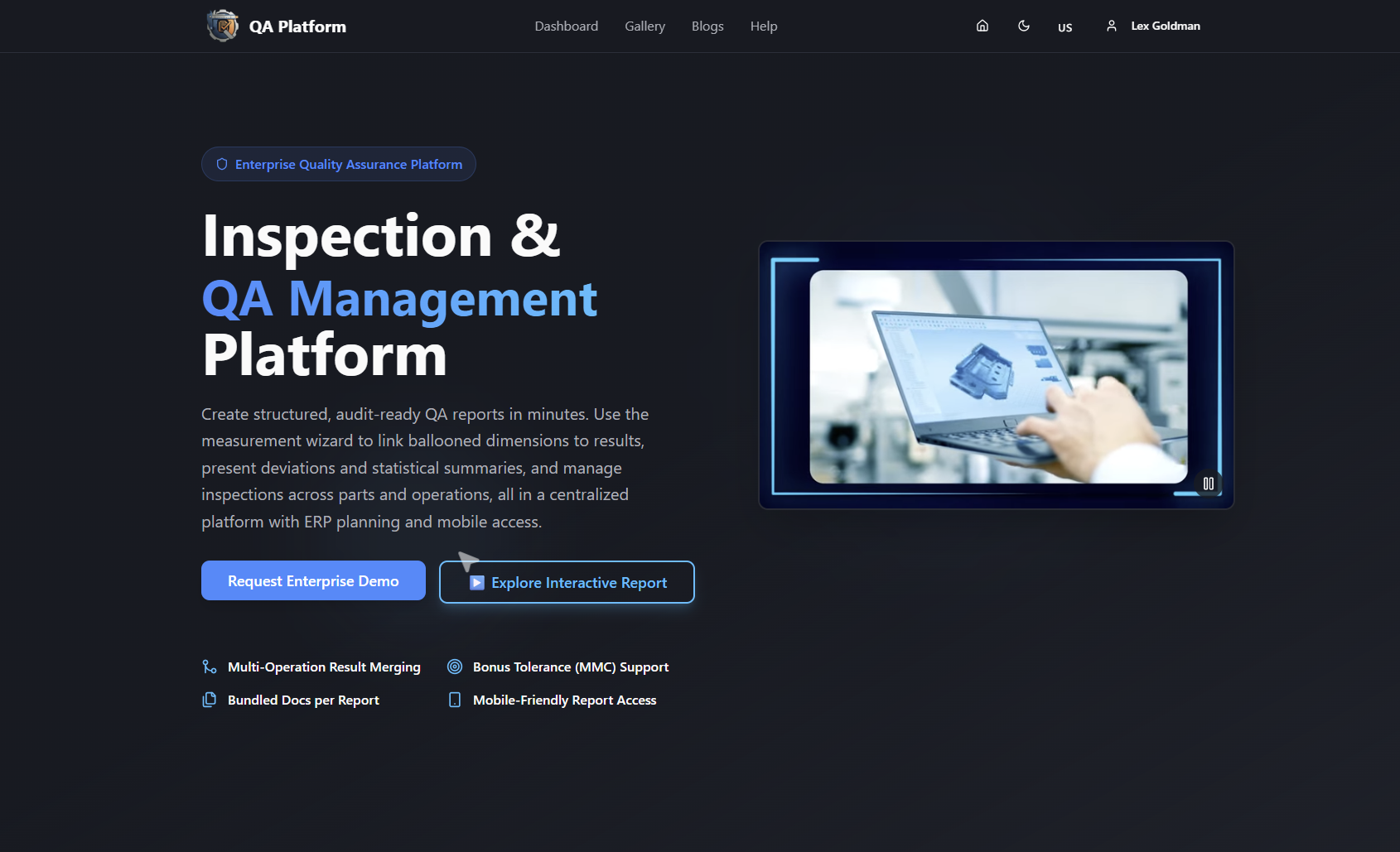
Our software is built around the evidence a PSW actually demands. Automated ballooning links drawing dimensions to measured results, CMM import and tolerance checks flag out-of-tolerance values before they reach a report, and an MES layer can keep capacity and run-rate numbers consistent across APPC, MPPC, and the PSW itself.
- Generate dimensional and GD&T reports efficiently.
- Track batch, operation, and capacity data in one place to maintain PSW number accuracy.
- Start on the Free plan or choose a paid plan if you need the full reporting workflow.
Check our pricing page to see which plan fits your next PPAP submission.
FAQ
What is a PSW in quality?
A PSW, or Part Submission Warrant, is the declaration document that closes a PPAP package, confirming the part matches the drawing and that supporting evidence is complete. The customer uses it to record disposition as approved, interim approval, or rejected, as described by iSixSigma.
What does PSW stand for in manufacturing?
PSW stands for Part Submission Warrant, the cover document submitted with a Production Part Approval Process package. It summarizes part identification, submission level, and a declaration that samples and evidence meet requirements.
What are the 5 levels of PPAP?
PPAP submission levels range from Level 1, a PSW submitted alone, through Level 5, where complete data stays on file at the supplier for review rather than being sent in. Level 3, which pairs the PSW with full supporting data, is the most common for new parts or tooling changes; our PPAP levels guide breaks down each level's evidence requirements.
What does PSW stand for in automotive?
In automotive supply chains, PSW still stands for Part Submission Warrant, and OEMs like Ford often require it in electronic form through a customer portal rather than as a paper document. Ford's guidance treats ePSW as the default submission path, with limited exceptions for specific submission types noted in its PPAP specifics.