
Multilingual work instructions are translated, versioned inspection and shop floor steps delivered inside your MES or QA platform, not static documents routed by email. Implement them with a single semantic source, human reviewed translations, and point of use language enforcement so every operator sees the same current step in their own language. This approach closes the gap between what engineering specifies and what the floor actually does.
TL;DR:
- Translation processes should include human review of critical measurement and safety language to ensure accuracy and consistency across all instructive content.
- System controls must enforce immutability, full revision history, role-based access, and strict approval workflows to meet ISO 9001 documentation standards for translated instructions.
- Using semantic models based on ISA-95 allows reusable, scalable instruction modules that support high variant counts and reduce authoring time for multiple product lines.
- Linking ballooned drawings, measurement data, and inspection steps through digital workflows ensures consistent references and facilitates direct import of CMM results into inspection records.
- Implementing phased rollouts focused on key languages and product families improves control, avoids confusion caused by mixed translations, and ensures instruction accuracy and audit readiness.
Table of Contents
- Why multilingual work instructions matter for quality and inspection
- Essential system features and document-control requirements
- Step-by-step implementation checklist for multilingual inspection instructions
- Translation best practices and human-in-the-loop review
- Integrating multilingual instructions with MES, CMM imports, and semantic models
- Compliance, audit readiness, and documented information under ISO 9001
- How to measure success and validate instruction quality
- Quick wins and common pitfalls
- How QA-Report supports this implementation checklist
- Authoritative standards and research to consult
- Sources
- FAQ
Why multilingual work instructions matter for quality and inspection
Language gaps on the shop floor are not a soft issue. A misread tolerance, a mistranslated hold point, or a skipped safety note shows up downstream as scrap, rework, or a failed audit. Multilingual instructions, properly controlled, close that gap at the source rather than after the fact.
The operational case is just as strong as the quality case. High mix, low volume shops that build many part variants benefit from reusable instruction modules that can be assembled per job rather than rewritten each time, a pattern supported by semantic models based on ISA-95 that integrate engineering data into digital instructions.
Translated, version controlled instructions also double as audit evidence.
- Fewer language induced errors because operators read instructions in their working language, not a translated afterthought.
- Faster onboarding for new hires and temporary staff who are not yet fluent in the plant's primary language.
- Consistent inspection sequences across shifts and sites, which matters when auditors sample work instructions against nonconformance records.
- Traceable evidence for ISO 9001, AS9100, and PPAP reviews, since a controlled translated instruction is still a controlled document.
Essential system features and document-control requirements
A platform that hosts multilingual inspection instructions has to satisfy document control requirements before it satisfies anything else. Translation is a layer on top of control, not a substitute for it.
- Immutable audit logs that record who created, edited, translated, and approved each instruction, with timestamps that cannot be altered after the fact.
- Full revision history tied to formal approval workflows, so a translated version cannot go live without sign off from a named reviewer.
- Language aware user interface that switches both instruction text and the surrounding menus, buttons, and prompts based on the operator's profile.
- Role based access that ties language preference to the operator's account, so the correct language appears automatically at login rather than by manual selection each session.
- The ability to map ballooned drawing IDs to instruction steps, display 3D or PMI views inline, and import CMM measurement results directly into the inspection record.
These controls are the same ones that govern any revision control process in manufacturing, with translation added as another attribute of the record rather than a separate system.
Pro Tip: Treat every translated instruction as a new revision requiring its own approval, never as a cosmetic copy of the approved source language version.
Step-by-step implementation checklist for multilingual inspection instructions
Rolling out multilingual instructions works best as a sequence, not a simultaneous launch across every part number and language.
- Scope the languages, part families, and compliance targets first. Pick the two or three languages your floor actually needs and the product lines with the highest error or rework rates.
- Author instructions as modular semantic pieces rather than monolithic documents. A 150% workflow, where one master model covers all variants and each job draws only the relevant steps, reduces authoring time and improves consistency across product families.
- Attach ballooned drawings to each instruction step so the operator sees the exact dimension or feature in context, not a separate reference sheet.
- Set a translation process: a machine generated draft first, then review by a human technical reviewer fluent in both languages and the process itself, then formal approval.
- Deploy through language profiles tied to operator accounts, with mobile access on the floor, and enforce that only the current approved version is ever displayed.
- Validate with a pilot First Article Inspection run in the new language, followed by targeted audits comparing translated steps against the approved source.
Research on semantic, ISA-95-based instruction models shows they cut authoring time and improve consistency for product families with many variants, which is the exact condition most shops face when they try to translate instructions line by line instead of modeling them once. That reuse effect is what makes scaling past one pilot language realistic.
Translation best practices and human-in-the-loop review
Machine translation can produce a usable first draft of an inspection step, but it cannot be the last step in the process for anything tied to measurement, tolerance, or safety. Human-in-the-loop review is what regulated manufacturers rely on to confirm that automated output preserves technical meaning.
- Translate the interface, not just the instruction text: menus, error messages, and confirmation prompts need to match the instruction language or operators end up guessing.
- Route critical measurement and safety language, such as tolerance callouts and lockout steps, to a reviewer with shop floor experience in both languages.
- Maintain a termbase so "datum," "hold point," and similar terms are translated the same way every time, and link each termbase entry to the engineering revision it supports.
- Record who approved each translated version, since translation version control tied to engineering revisions is what lets an auditor confirm a translation matches the current drawing.
Pro Tip: Never let an operator switch instruction language without also switching the surrounding interface; a translated step next to an untranslated button is where confusion starts.
Integrating multilingual instructions with MES, CMM imports, and semantic models
Translation only holds up if the underlying instruction is correctly tied to the part, the operation, and the measurement data behind it. A semantic model based on ISA-95 represents product variants and operations as structured data, so instructions can be generated or assembled programmatically instead of copied and edited by hand for every new part.
- Represent part families and operation sequences in a shared semantic model so one translated instruction module serves every variant that uses it, as described in How AI is changing the game in sheet metal fabrication.
- Attach ballooned drawing IDs and PMI data to each instruction step, so the operator and the inspector reference the same geometry.
- Import CMM measurement files directly into the inspection record to auto populate results against the ballooned dimensions, removing manual transcription.
- Surface only the current approved language and version in route cards and the operation sequence, never an older or unapproved draft.
This kind of linkage between engineering data and inspection results is the same pattern covered in digital thread and model based definition workflows. NIST's digital twin research points to the same requirement from the production side: near real time data exchange between digital twins, MES, and shop floor systems depends on consistent, machine readable models, not loosely linked documents.
Compliance, audit readiness, and documented information under ISO 9001
Electronic multilingual instructions have to satisfy the same controls as paper ones. ISO 9001's documented information requirements do not relax because a document is translated or stored in software instead of a binder.
- Maintain electronic documented information under the same approvals, retention periods, and change traceability expected of paper records.
- Give auditors access to immutable logs, full version histories, and signed inspection reports so they can trace any instruction back to its approval chain.
- Integrate electronic evidence, including CMM exports and signed FAI PDFs, directly into the inspection record rather than storing it separately from the instruction it supports.
ISO 9001 auditing guidance specifically calls out application level controls, versioning, and evidence of how electronic documented information is produced and retained as points auditors should examine. Electronic systems do not get a lighter review than paper ones; they get a different checklist, covering immutable audit logs and approval workflows instead of signature pages.
How to measure success and validate instruction quality
Translating instructions is not the finish line. Validate that the translated version actually performs as well as the source.
Track operational KPIs including first pass yield, inspection cycle time, and rework rate by language, so a drop tied to one translation surfaces quickly rather than blending into the plant wide average. Pair those with system KPIs: adoption rate by language, how often a translation gets revised after release, and any errors traced specifically to a translated step rather than the process itself.

A documented approach to validating digitalized instructions involves pilot First Article Inspection runs and targeted audits that compare translated steps directly against the approved source, following the same ontology based review logic described in research on digitalized manual work instructions. Running a translated instruction through one full FAI cycle before wide release catches most mismatches before they reach the floor.
Quick wins and common pitfalls

Pilot small. Pick one product family and one language, run it end to end, and fix what breaks before adding a second language or a second line. Teams that try to translate everything at once lose track of which version is actually approved.
Build UI localization into the plan from day one. A translated instruction sitting next to an untranslated menu creates more confusion than no translation at all. And treat sign off on translated versions as a real control point, not a formality: a translation with no named approver is a nonconformity waiting to be found.
— Michael Chen
How QA-Report supports this implementation checklist
QA-Report is built around the same controls this checklist asks for, in one platform instead of several disconnected tools. 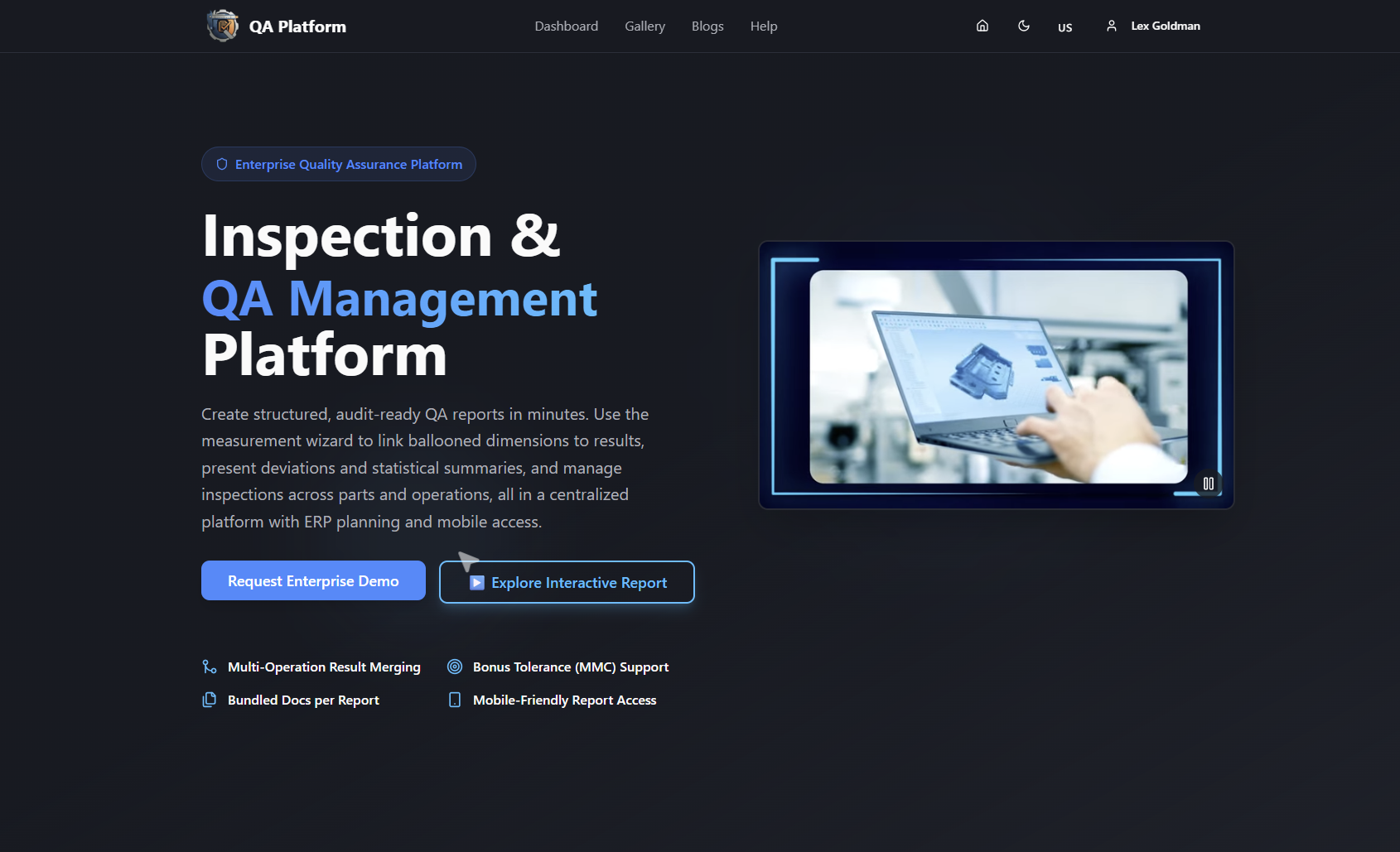
The multi-language interface switches instruction text and the surrounding controls together, so operators never face a mismatched screen. Automatic ballooning attaches drawing dimensions to inspection steps without manual markup, the built in CMM import maps measured results to those same dimensions, and the MES layer routes route cards and operations by current approved version. Every report, revision, and approval is logged for audit, satisfying the same documented information expectations ISO 9001 auditors look for.
| Checklist need | QA-Report capability |
|---|---|
| Point of use language enforcement | Multi-language UI tied to operator profile |
| Ballooned drawing linkage | Automatic drawing ballooning with 3D/STEP viewer |
| Measurement import | CMM data import mapped to balloon IDs |
| Route cards and sequencing | Integrated MES with route cards and operation planning |
| Audit evidence | Version controlled, audit ready PDF reports |
A pilot typically starts on the Free plan to test ballooning and reporting on one part family, moving to Basic at $49.99 per month or PRO at $149.99 per month as language coverage and MES use expand. On-Premise and Enterprise Solutions are available for organizations with data confidentiality requirements, priced on request.
Authoritative standards and research to consult
- ISO 9001 documented information guidance for electronic document control expectations.
- NIST research on digital twins and human-in-the-loop manufacturing for interoperable data models.
- Peer reviewed work on ISA-95 based semantic models for instruction reuse across variants.
Sources
- Managing product variability in digital assembly instructions: International Journal of Computer Integrated Manufacturing
- ISO 9001 Auditing Practices Group: Digital processes guidance
- Document control capabilities for ISO 9001 (Document Locator)
- NIST: Digital twin framework and applications for manufacturing
FAQ
What makes work instructions count as "multilingual" in an MES or QA system?
Multilingual work instructions are translated versions of the same controlled, versioned instruction, not informal translations kept alongside the original. Each translated version goes through its own approval and is tied to the same engineering revision as the source language, so operators in different languages always see the current, equivalent step.
Should we use machine translation or human translators for inspection steps?
Machine translation is useful for a first draft, but critical measurement, tolerance, and safety language needs review by a human technical reviewer fluent in the process and both languages. This human-in-the-loop step is standard practice in regulated industries before a translated instruction is approved for use.
How does ISA-95 help with multilingual instruction reuse?
An ISA-95 based semantic model represents part variants and operations as structured data rather than separate documents, so one translated instruction module can serve many product variants. Research on semantic models found this approach reduces authoring time and improves consistency for product families with high variant counts.
What does ISO 9001 require for electronic translated instructions?
ISO 9001 requires that electronic documented information, including translated instructions, carry the same approvals, version control, and retention as paper documents. Auditors expect to see immutable logs and controlled approval workflows confirming that only the current authorized version was in use.
Can QA-Report manage multilingual instructions alongside CMM and MES data?
QA-Report's multi-language interface switches instruction text and controls together, while its CMM import and MES routing keep measurement data and route cards tied to the same approved, translated version. Plans start with a Free tier for initial evaluation before scaling to paid tiers.